


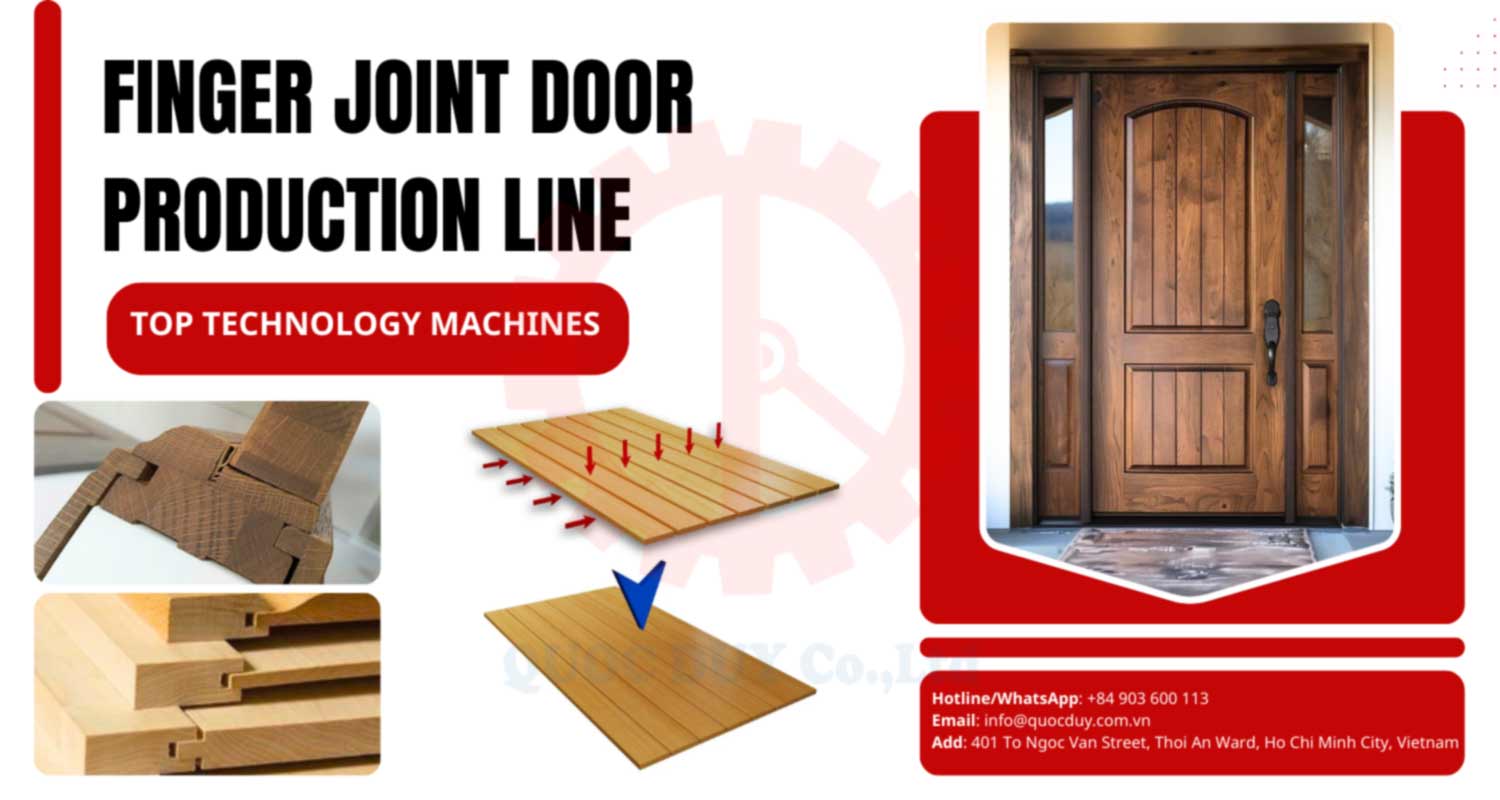
In the context of the furniture industry’s increasing demands for quality, aesthetics, and productivity, the finger-jointed wooden door production line has become an optimal solution for modern factories. It not only maximizes the utilization of natural wood materials but also enhances overall production efficiency.
With a closed-loop process covering blank preparation, finger jointing and panel assembly, door leaf machining, frame finishing, and surface coating, the production line is synchronously designed to standardize quality, optimize costs, and strengthen the competitiveness of wooden door manufacturers.
STAGE 1: RAW MATERIAL PREPARATION
This is the foundational stage that determines the overall accuracy and durability of the entire door leaf. The wooden blanks are processed to meet precise standards in dimensions, thickness, and flatness before being assembled into larger panels.
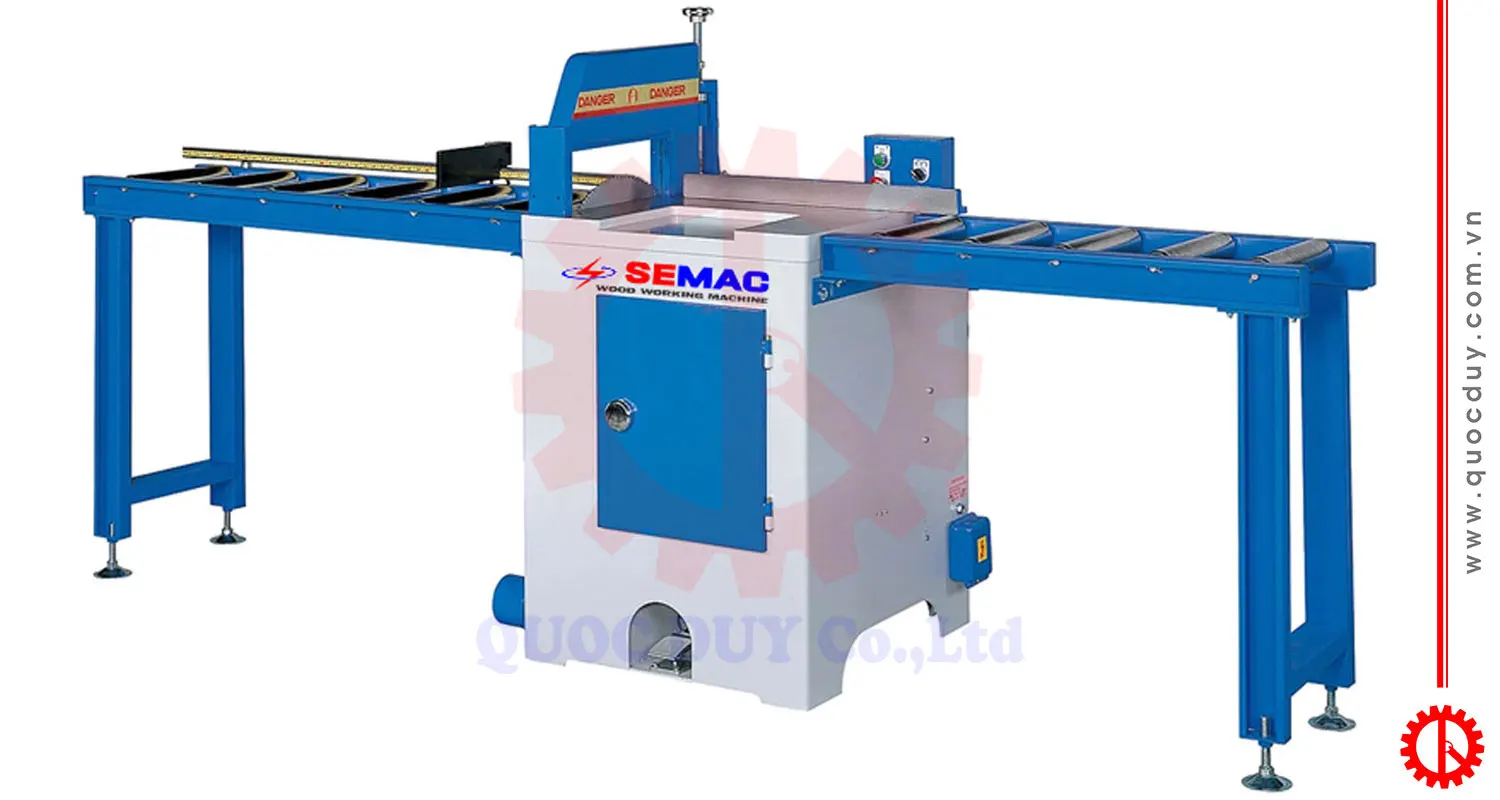
1. CROSS CUTTING SAW – SM 18
For rough, long wooden bars, the material is fed into the cross cutting saw to remove dead knots, end cracks, warping, and other natural wood defects.
This process ensures proper selection and standardization of blanks in terms of length, quality, and stability before proceeding to subsequent machining stages within the production line.
2. DOUBLE-SIDED PLANER – SM 635 ARD
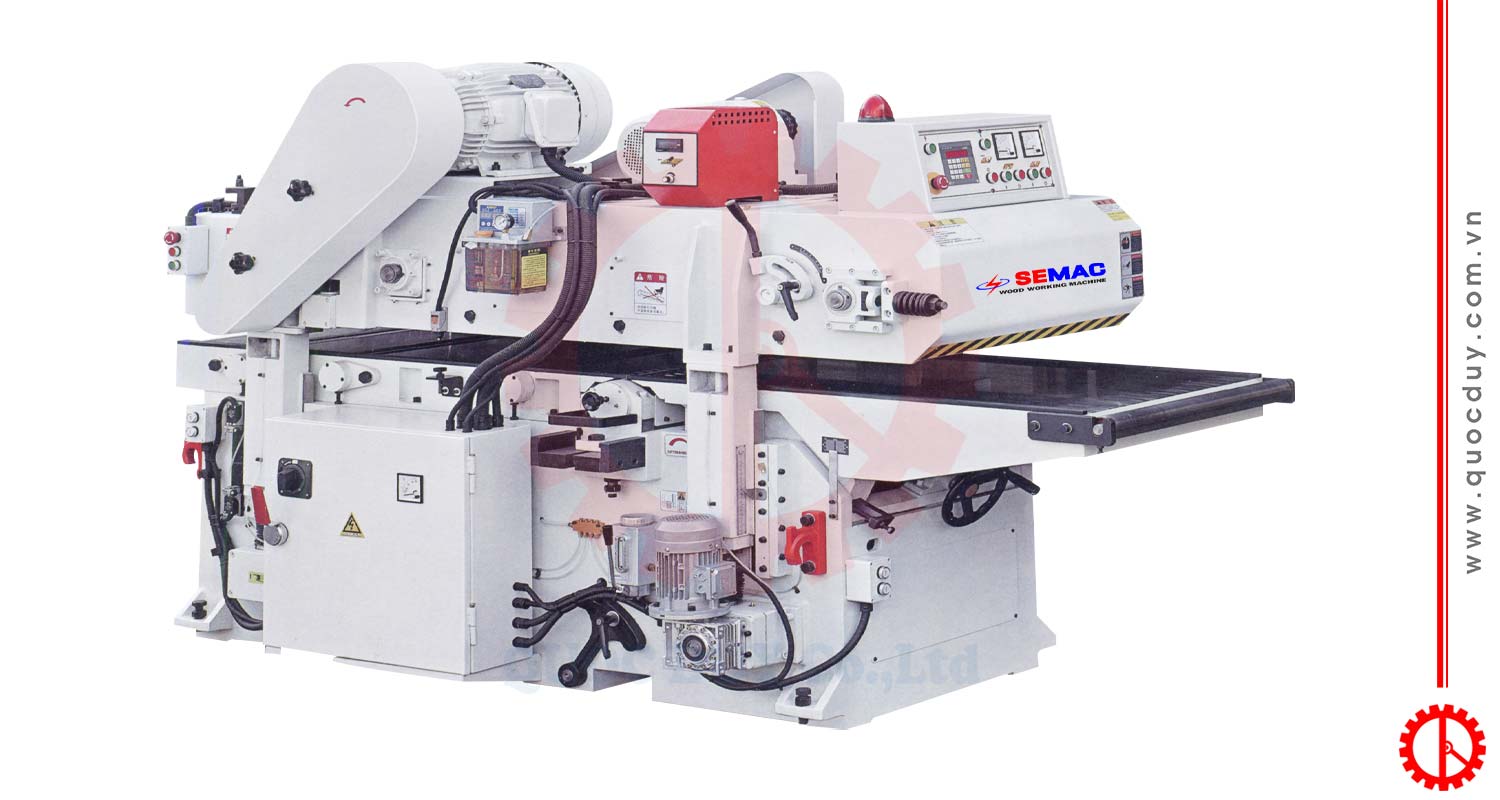
After being processed and cut to standard dimensions, the wooden blanks are fed into the SM 635 ARD double-sided planer for simultaneous machining of both surfaces.
This stage ensures surface flatness, uniform thickness, and enhanced dimensional accuracy for each wooden piece. Once planed to technical standards, the blanks are ready for the finger jointing and panel assembly process, contributing to stronger bonding quality and improved durability
STAGE 2: FINGER JOINTING, PANEL GLUING & SURFACE FINISHING
In a finger-jointed wooden door production line, the panel assembly stage plays a pivotal role, directly determining the overall quality of the final product. This is the step where the door leaf is formed — a critical component that affects load-bearing capacity, structural stability, and long-term durability.
The quality of the assembled blanks not only influences bonding strength but also significantly impacts surface aesthetics, flatness, and the ability to minimize warping and shrinkage during use. Therefore, investing in a precise and synchronized panel joining system is essential for professional finger-jointed wooden door manufacturers.
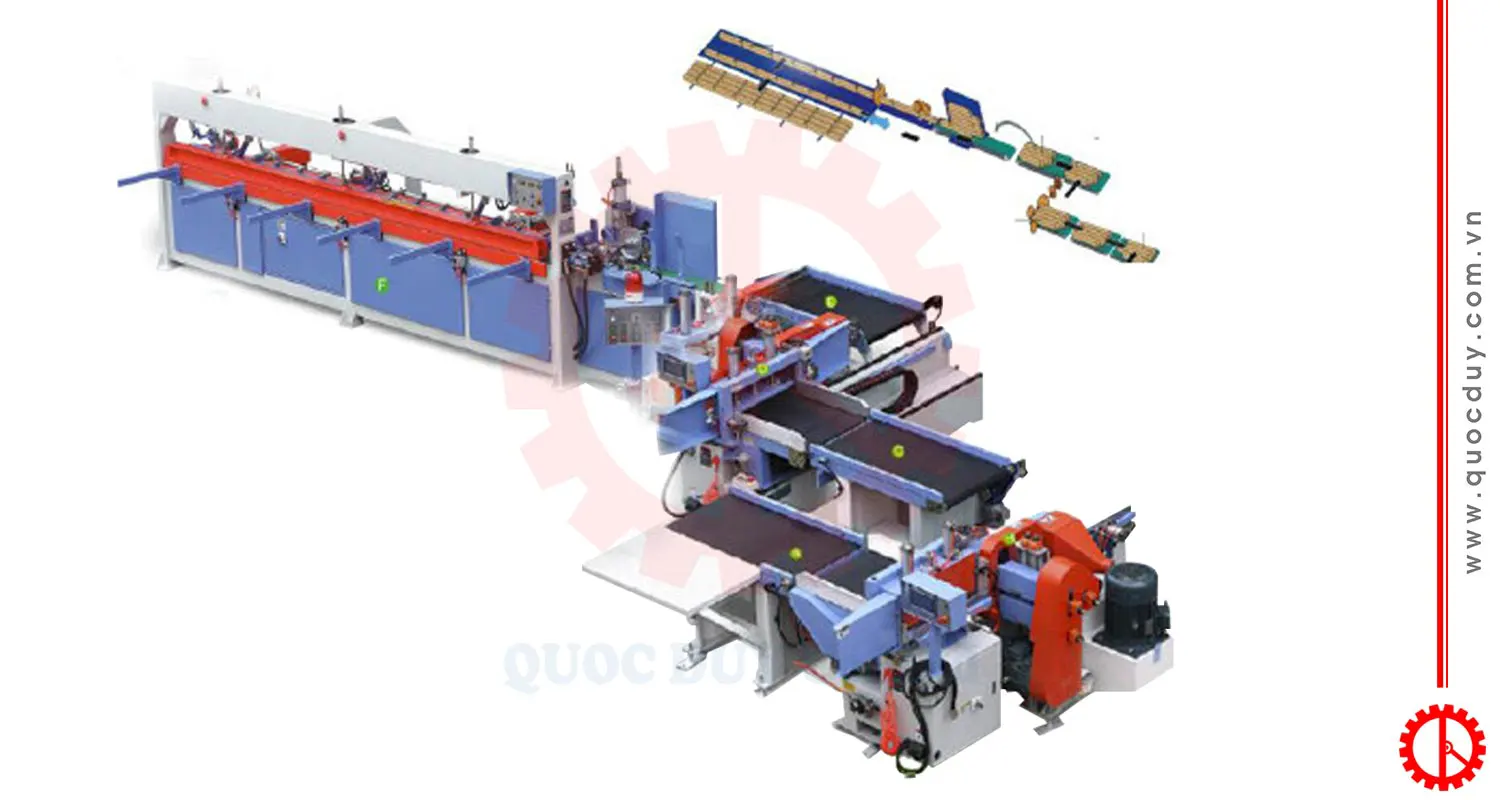
4. AUTOMATIC FINGER JOINTING SYSTEM – SMBL 3515II + 1560A
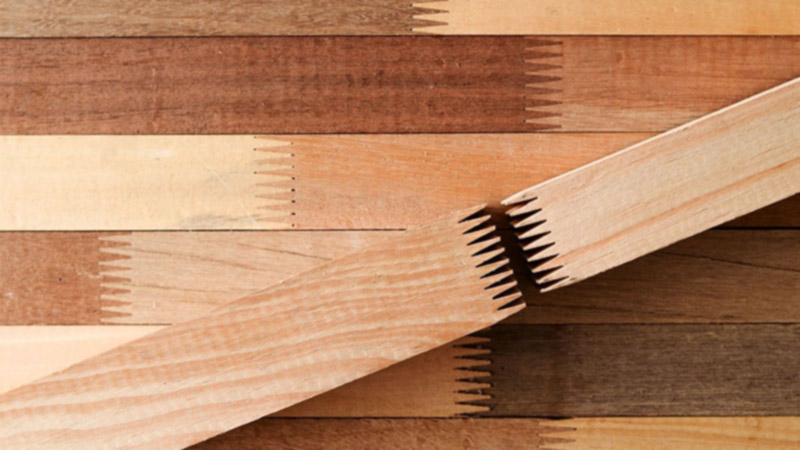
After processing, the wooden blanks are sorted into shorter pieces of varying lengths. At this stage, the pieces are fed into the automatic finger jointing system, where finger profiles are milled, glue is applied, and the components are pressed together to form standardized long strips.
The fully automated and closed-loop operation ensures high precision of the finger profiles, strong and consistent bonding quality.
The finished products after jointing offer excellent stability, reduced warping, and optimized material utilization before proceeding to the panel assembly stage in the finger-jointed wooden door production line.
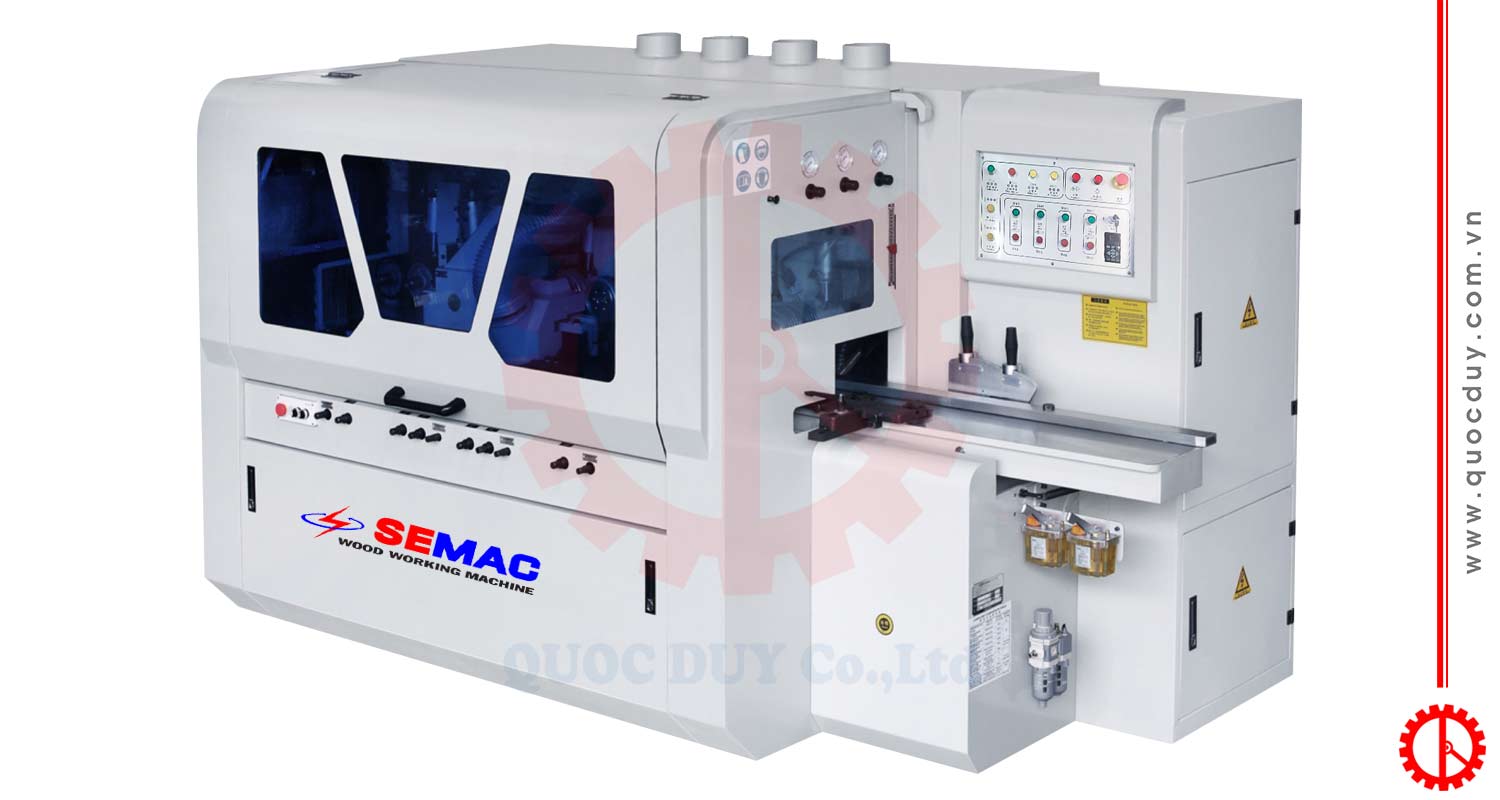
5. FOUR-SIDED PLANER – 4 SPINDLES – SMVK B418D
After finger jointing into long strips, the material undergoes a precision planing process to calibrate dimensions and ensure uniform thickness before proceeding to final panel assembly.
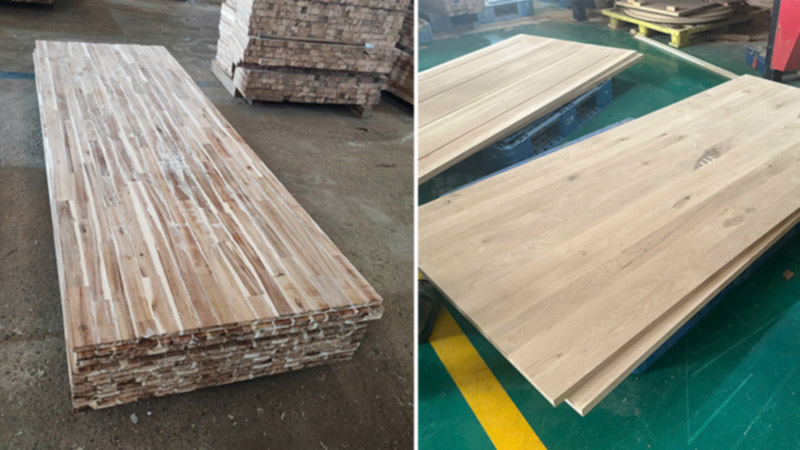
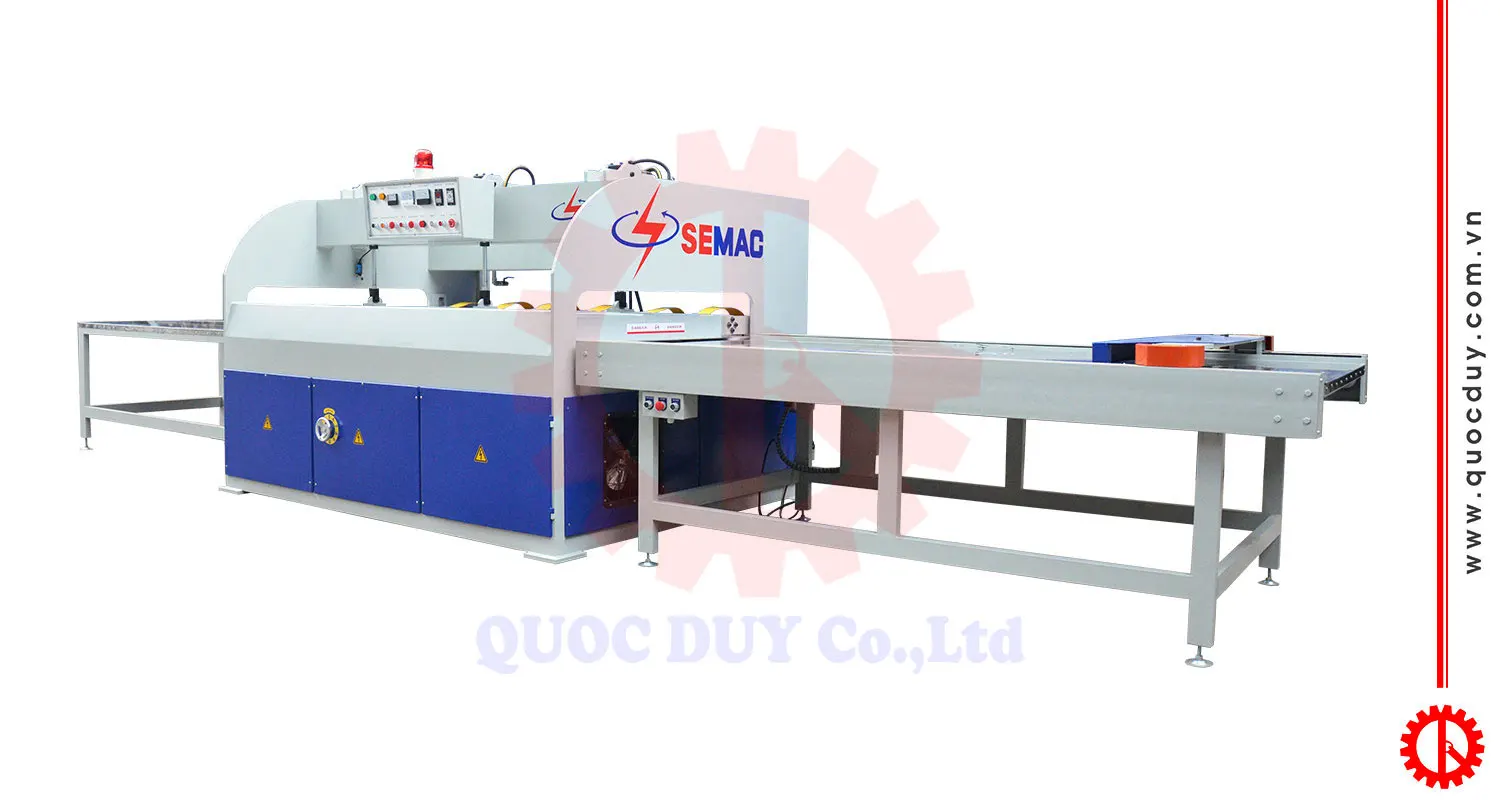
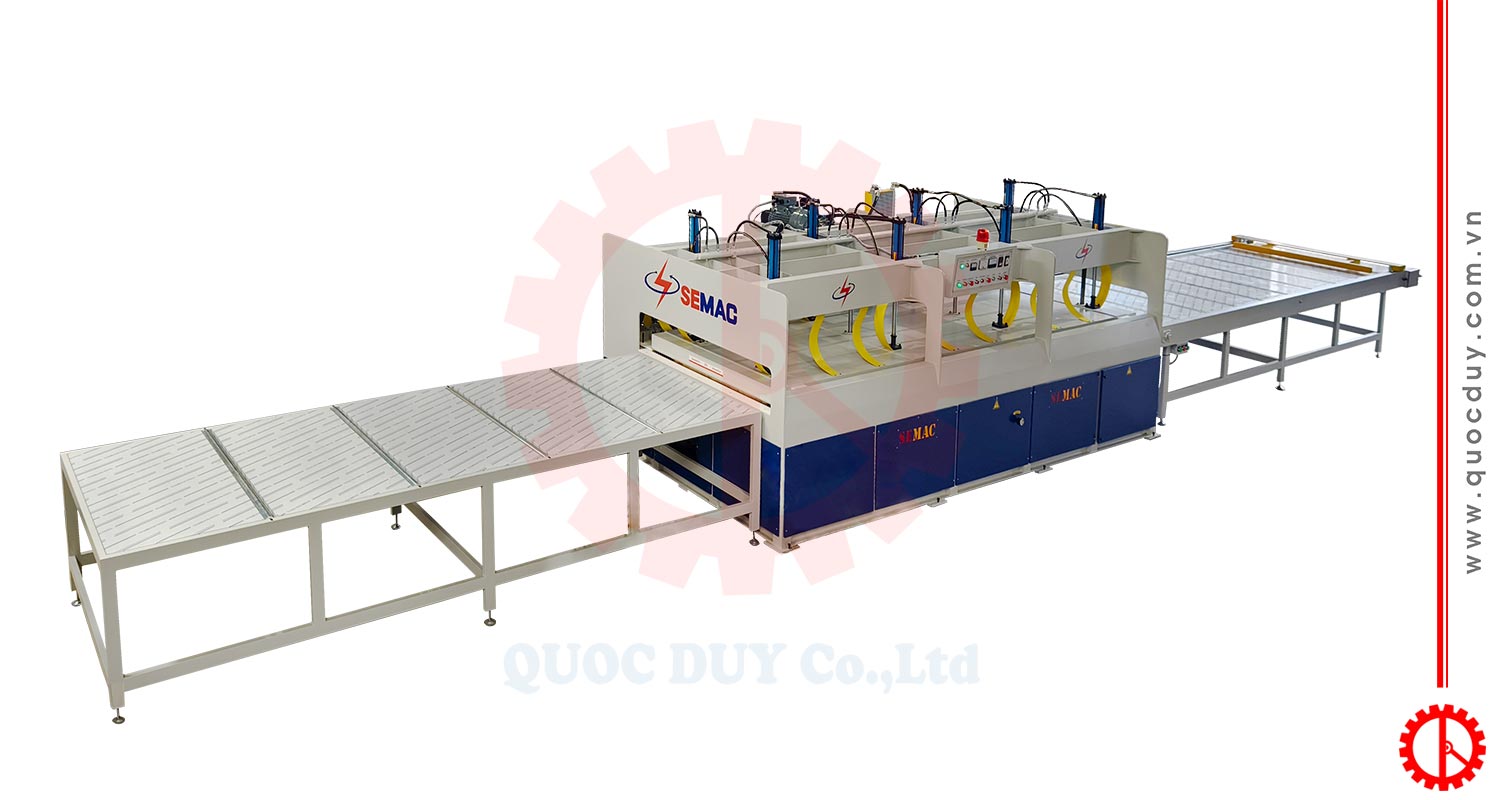
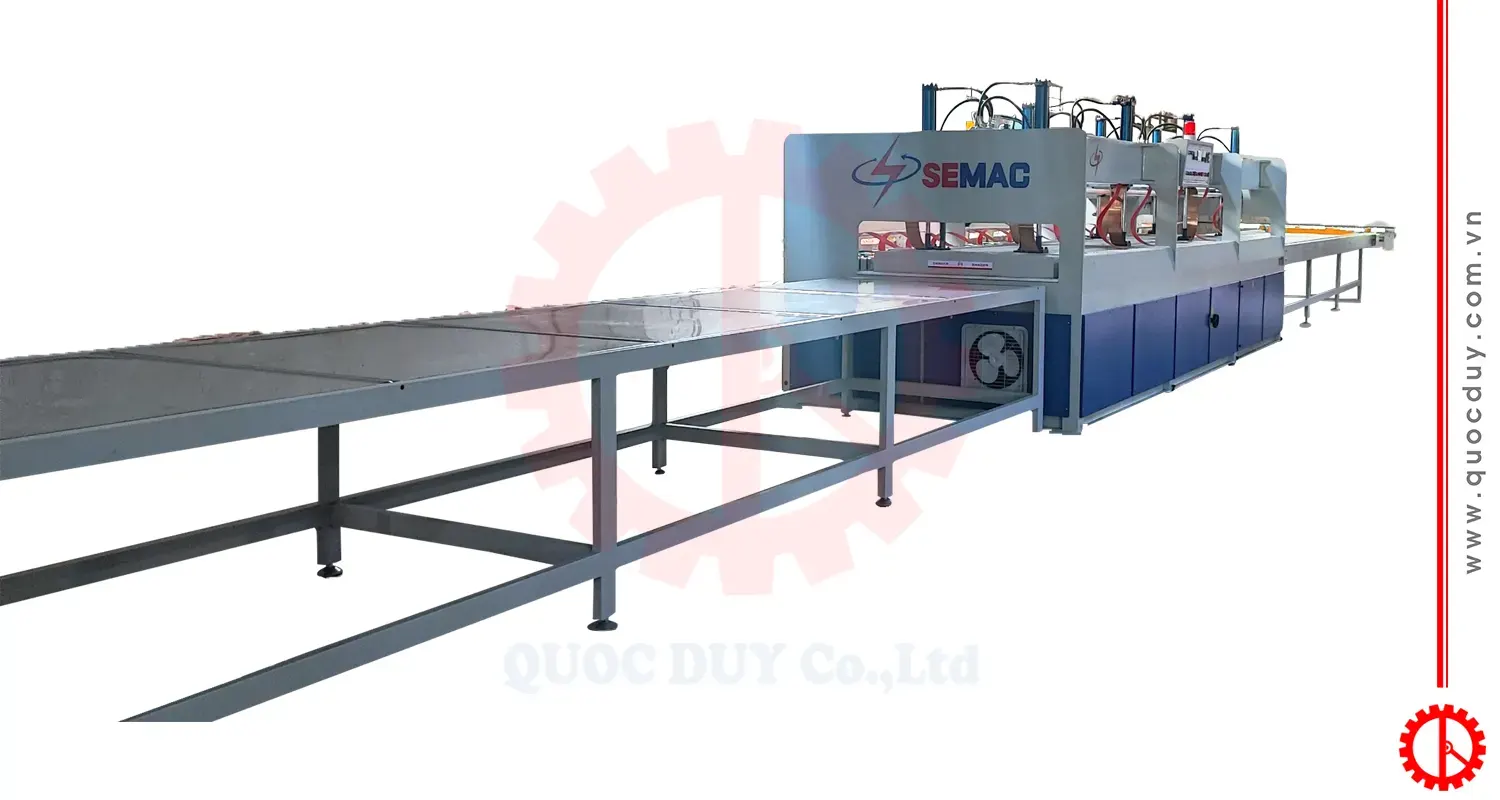
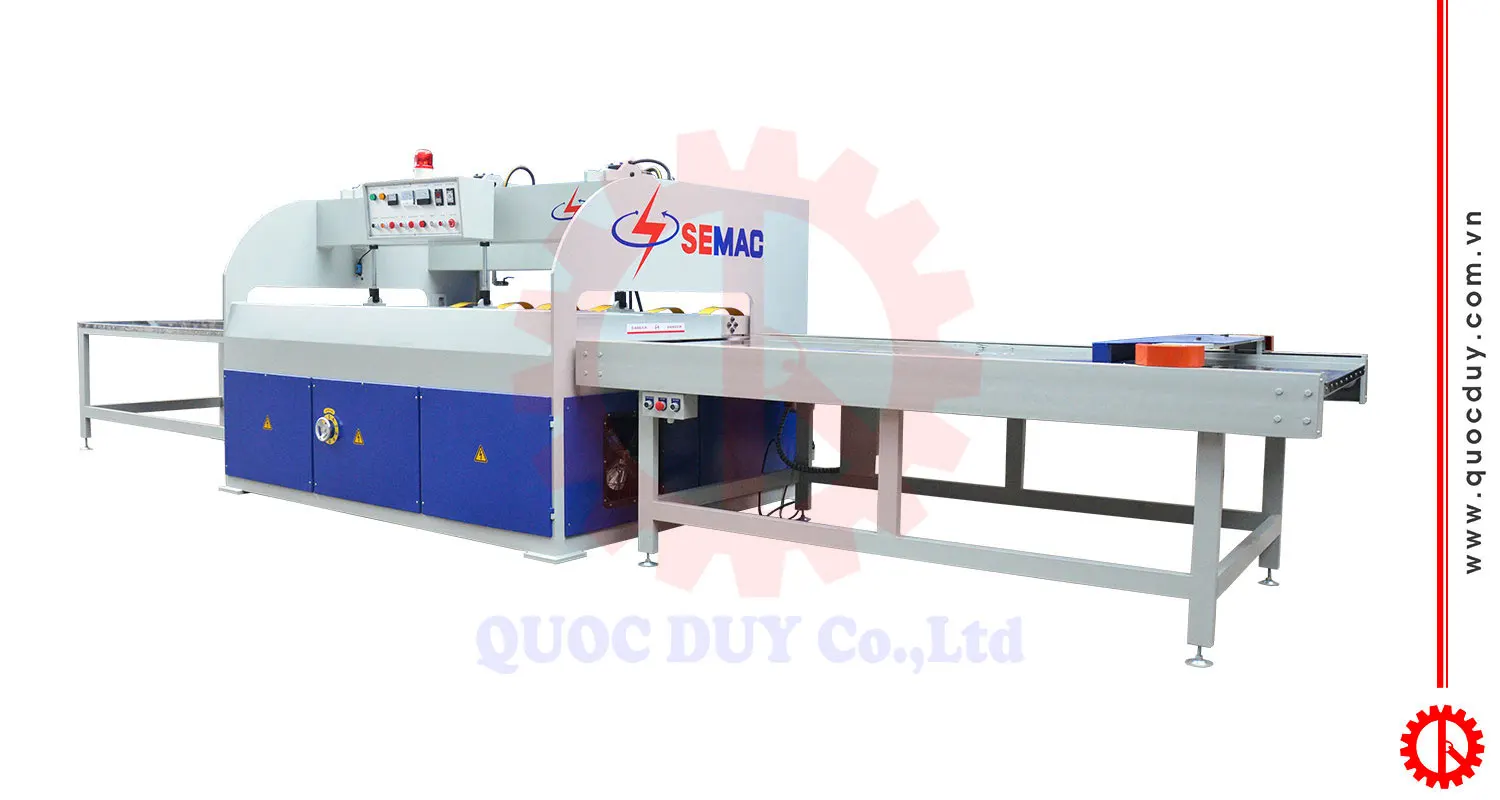
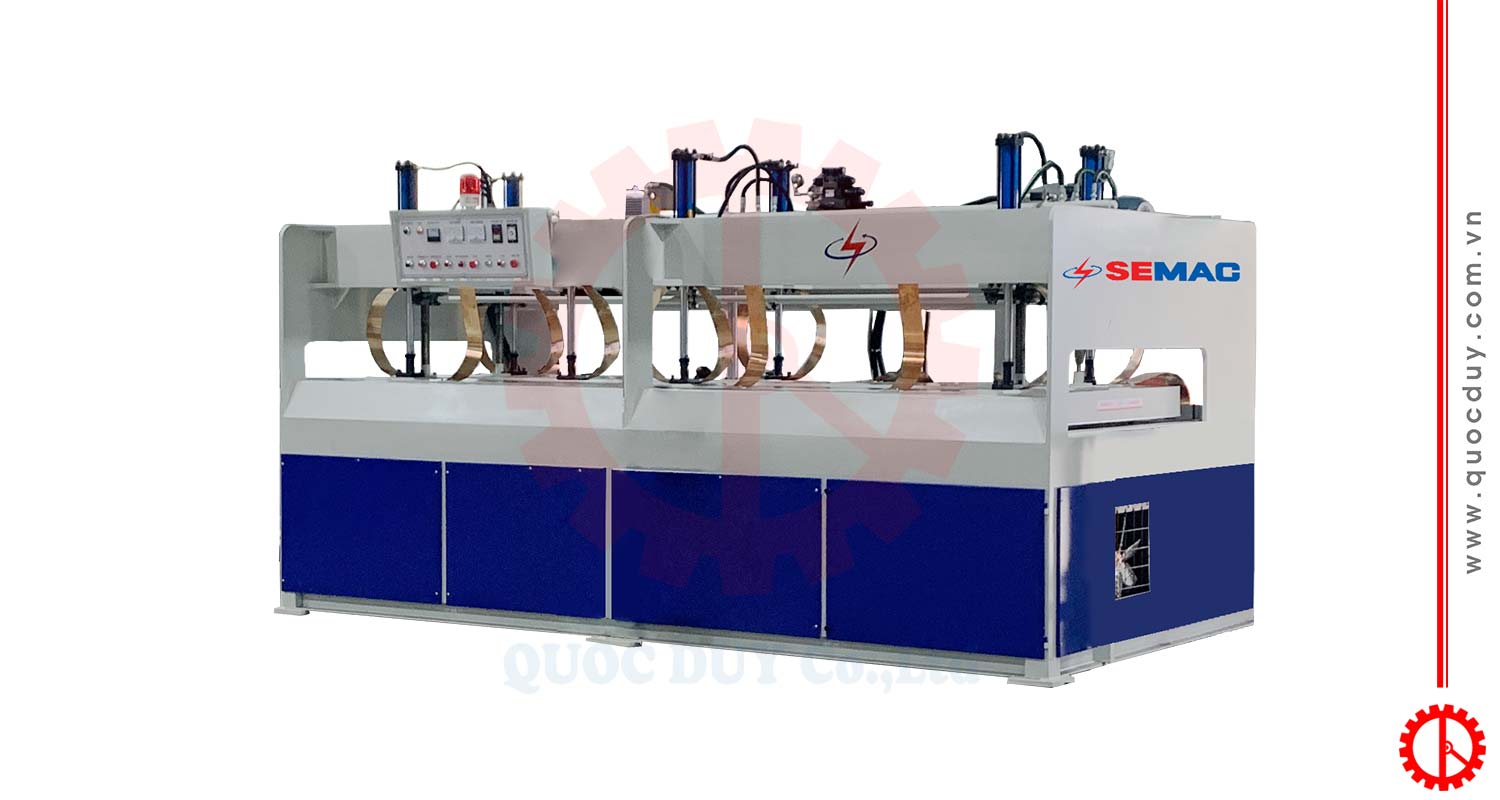
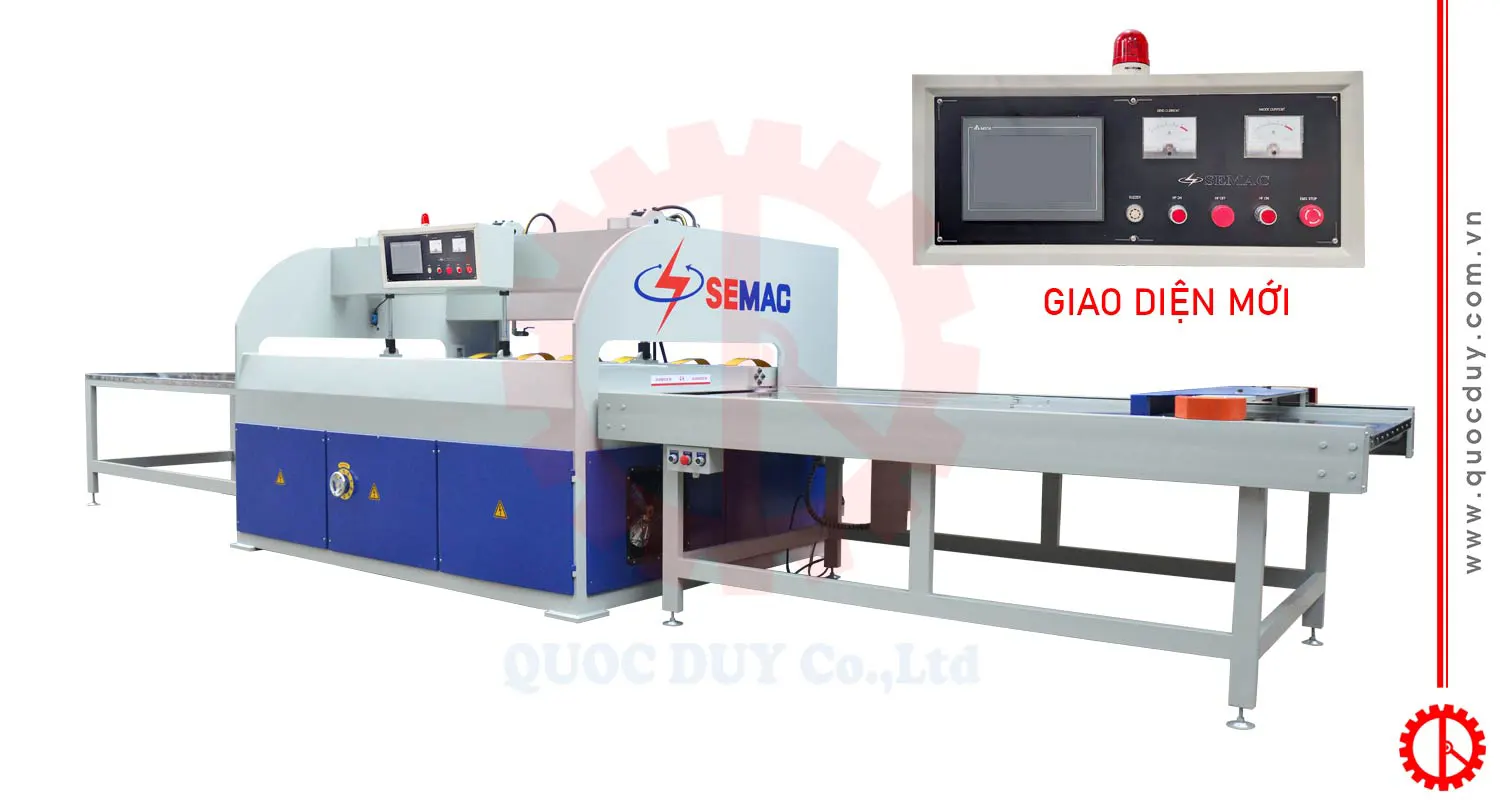
6. HIGH-FREQUENCY PANEL PRESS – SM 84H35
After the finger jointing stage, the strips are fed into the large-format high-frequency panel press – SM 84H35 – to be bonded into complete panels.
The machine utilizes closed-loop dual high-frequency heating technology (self-generated and self-absorbed), enabling rapid adhesive curing, enhanced bonding strength, and improved operational safety.
The system is compatible with both single-component and two-component adhesives, offering flexible solutions to meet the specific production requirements of each factory within the finger-jointed wooden door manufacturing process.
Average Pressing Time per Panel:
1 – 3 minutes/panel: Thickness ≤ 30 mm
3 – 4 minutes/panel: Thickness 30 – 75 mm
4 – 5 minutes/panel: Thickness 75 – 90 mm
Thanks to high-power high-frequency technology, the pressing time is significantly reduced compared to conventional cold pressing methods. This results in higher productivity, lower semi-finished inventory, and improved operational efficiency across the entire finger-jointed wooden door production line.
Explore our High-Frequency Wood Laminating Machine models
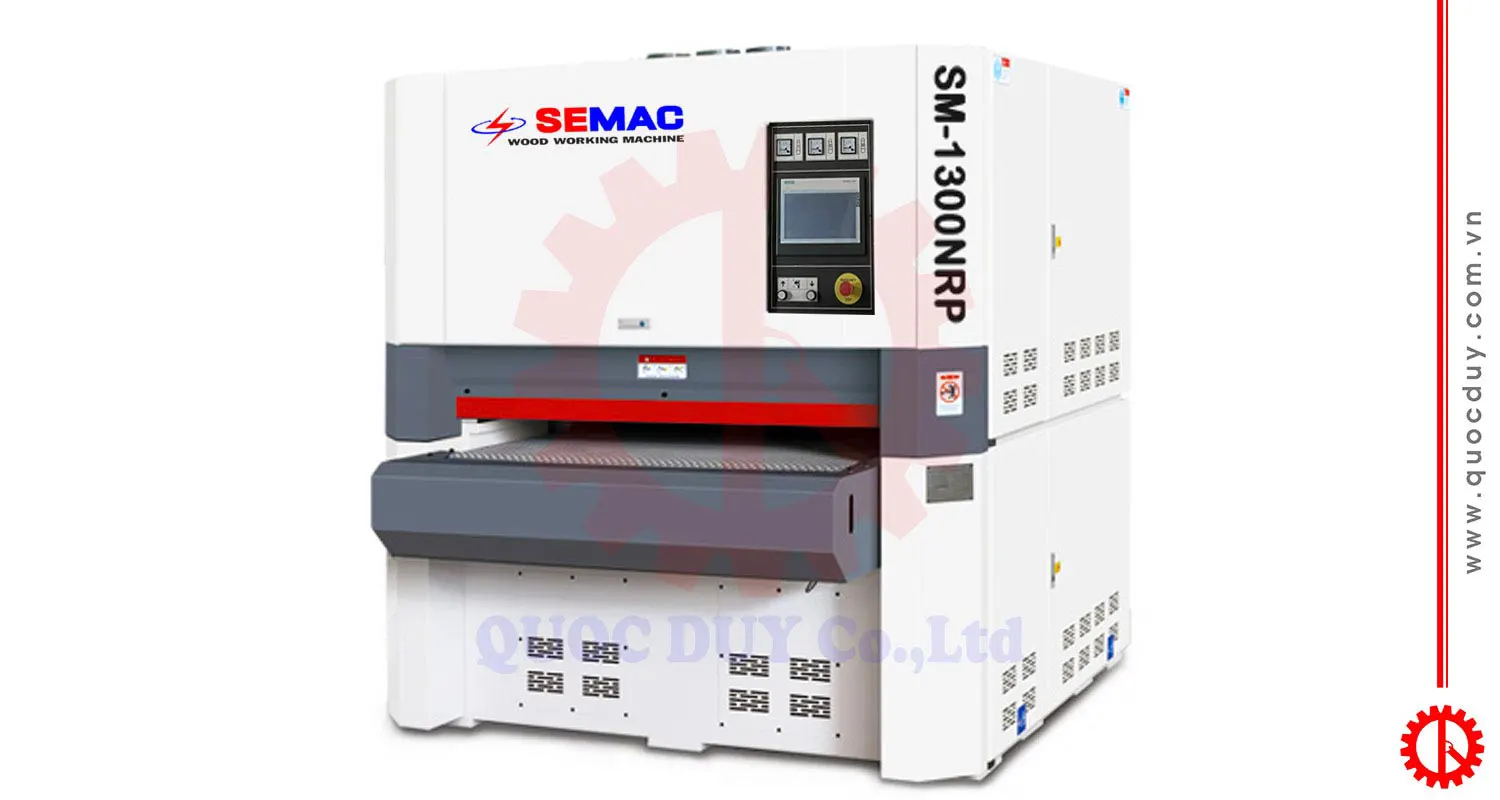
7. PLANER SANDER – SM 1300NRP
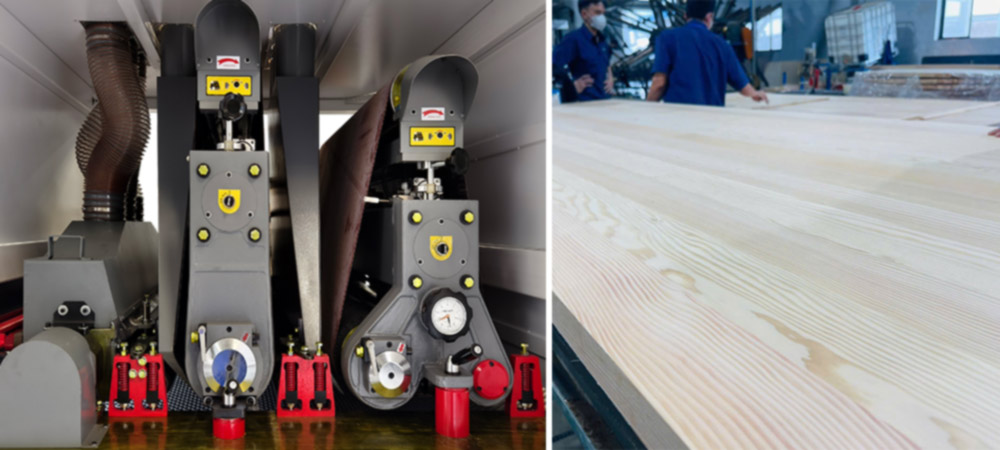
This is one of the most suitable sanding machines on the market for processing jointed panels, hardwood, and similar materials.
With its specialized configuration, the first planer head calibrates the surface and ensures the required thickness accuracy. The sanding head positioned afterward smooths the surface, preparing it for subsequent pressing or surface lamination processes.
This combination enhances dimensional precision, improves surface quality, and optimizes preparation efficiency within the finger-jointed wooden door production line.
STAGE 3: DOOR LEAF CNC PROCESSING
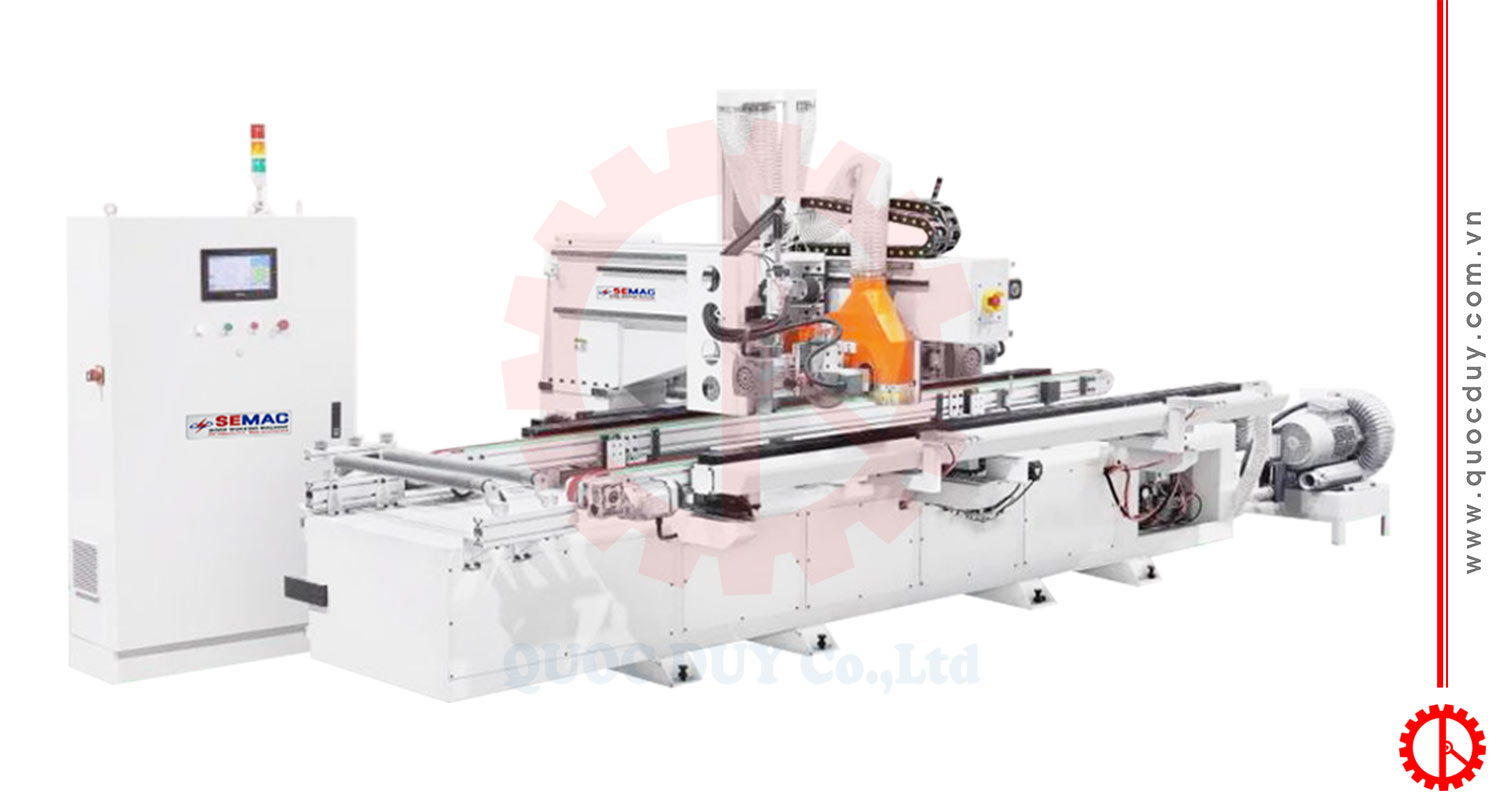
8. 4-SIDE DOOR TRIMMING MACHINE – 3 CUTTING HEADS – SM 6430
After completing the panel gluing and sanding stages, the door leaf edges may still be uneven or slightly oversized compared to technical standards. At this point, the SM 6430 four-side trimming machine precisely calibrates and trims all four edges of the door leaf.
With its stable three-cutting-head design and high machining accuracy, the machine ensures absolute dimensional precision, consistent squareness between edges, and clean, sharp cutting surfaces—meeting strict quality requirements before moving to subsequent processing stages.
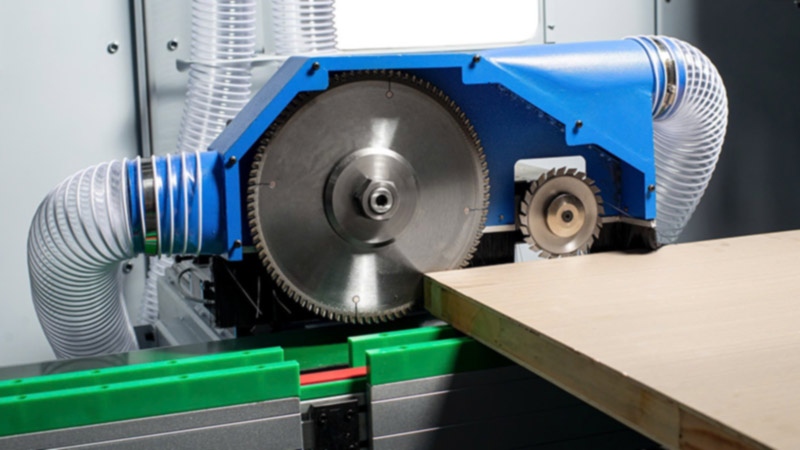
This stage finalizes the door blank preparation before proceeding to panel routing, lock mortising, and hinge machining in the finger-jointed wooden door production line.
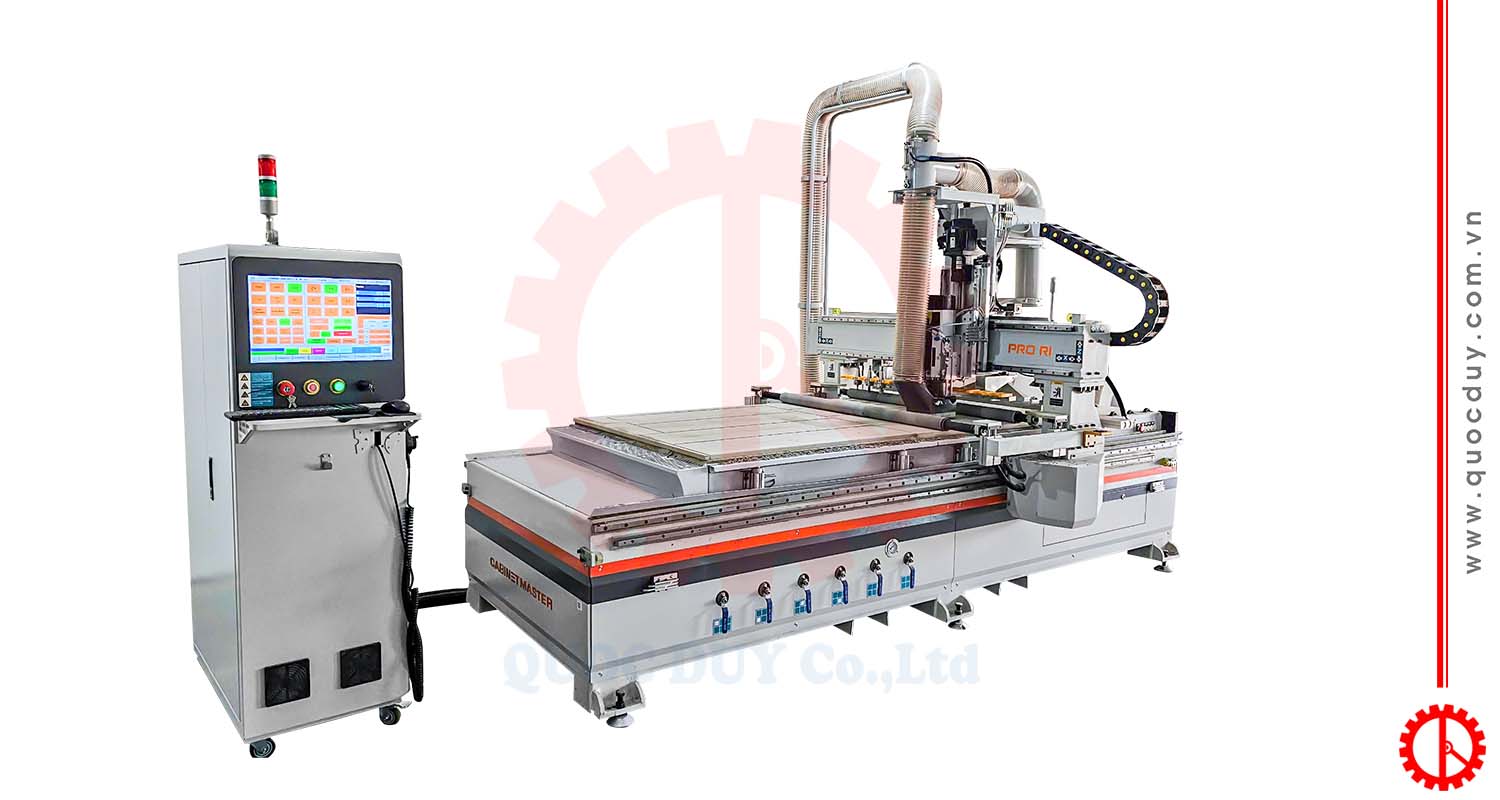
9. CNC ROUTER WITH AUTOMATIC TOOL CHANGER (ATC) – PRO R1
The machine is equipped with an Automatic Tool Changer (ATC) system, allowing multiple machining operations to be performed continuously in a single setup, such as panel routing, decorative edge profiling, groove cutting, and pattern engraving.
This capability enhances machining flexibility, improves accuracy, and significantly increases productivity in the finger-jointed wooden door manufacturing process.
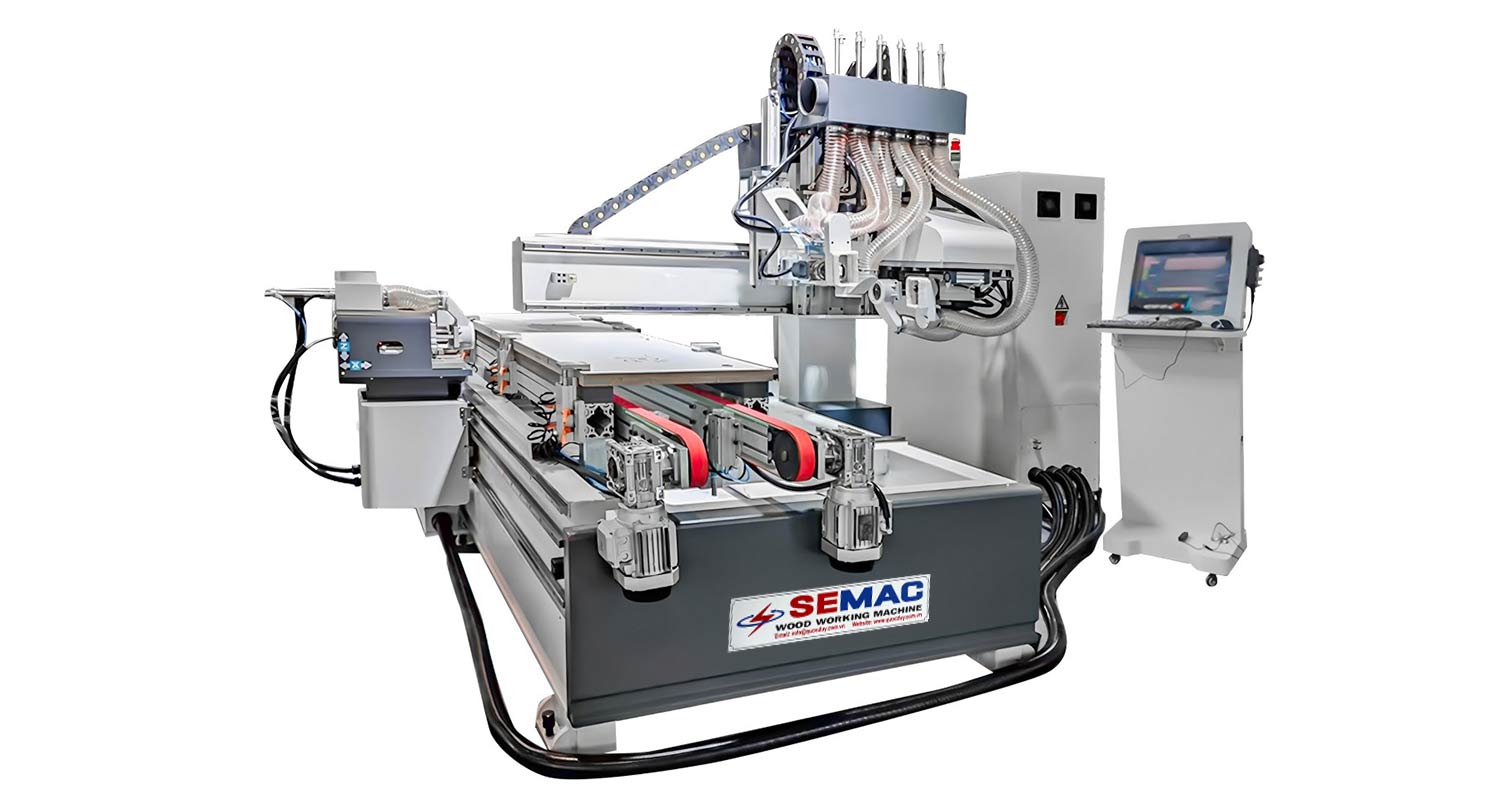
10. DOOR LOCK & HINGE MORTISING MACHINE – SM D1N
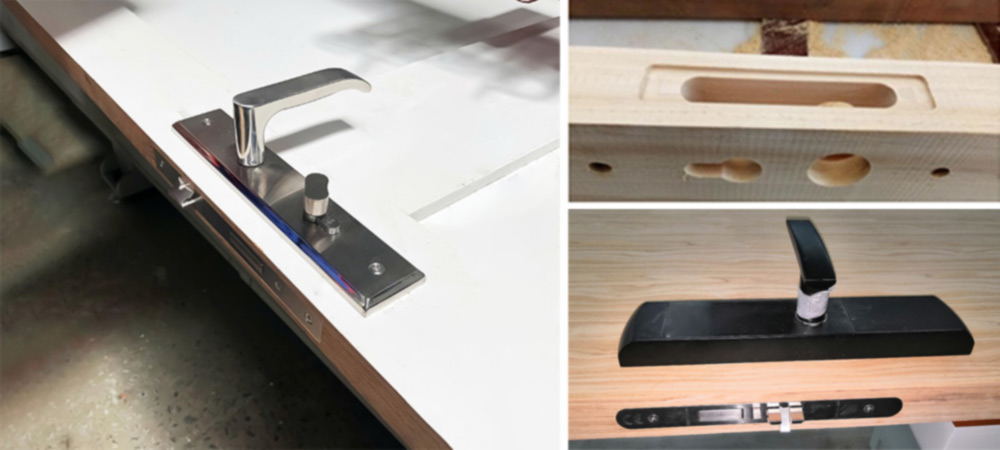
The SM D1N lock and hinge mortising machine is a specialized solution in the finishing stage of finger-jointed wooden door production. It enables precise machining of lock and hinge installation positions in accordance with technical standards.
STAGE 4: WOODEN DOOR FINISHING & COATING
11. CNC DOOR SPRAYING MACHINE – SPD 2500D
The finishing stage is the final step after machining the solid wood door leaf and plays a decisive role in determining both aesthetic quality and product durability.
As wooden doors are large-sized products, many factories today invest in modern coating systems to maintain full control over production. The application of a dedicated CNC spraying machine offers multiple advantages:
Labor cost reduction and minimized impact from external environmental factors
Consistent and stable coating surface quality
Better control of raw materials and delivery schedules
Cost optimization while maintaining strict control over the entire production process
As a result, the finished wooden doors achieve high aesthetic standards and long-lasting durability over time.

STAGE 5: WOODEN DOOR FRAME PROCESSING
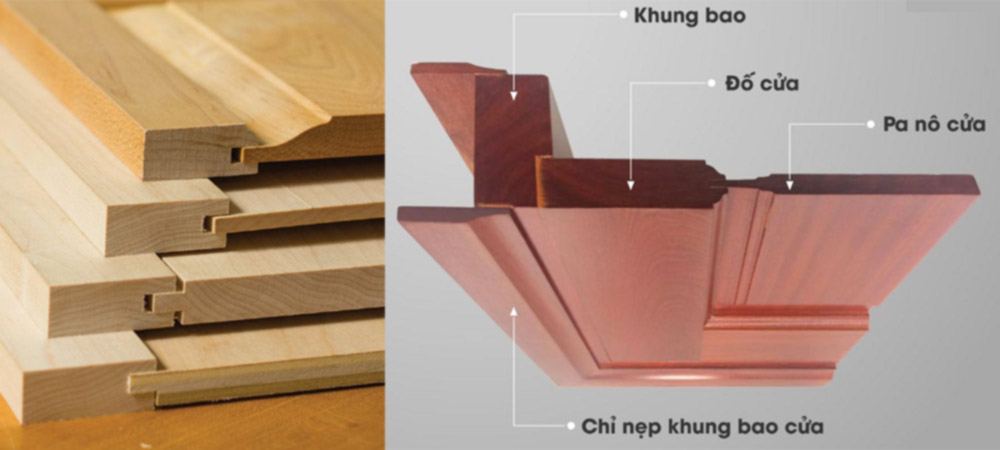
The door frame requires high precision in cross-sectional dimensions, straightness, and cutting angles, as it is the structural component that directly bears loads and determines the tight fit and alignment during on-site installation.
12. 4-SIDED PLANER – 6 SPINDLES – SMVK 623D
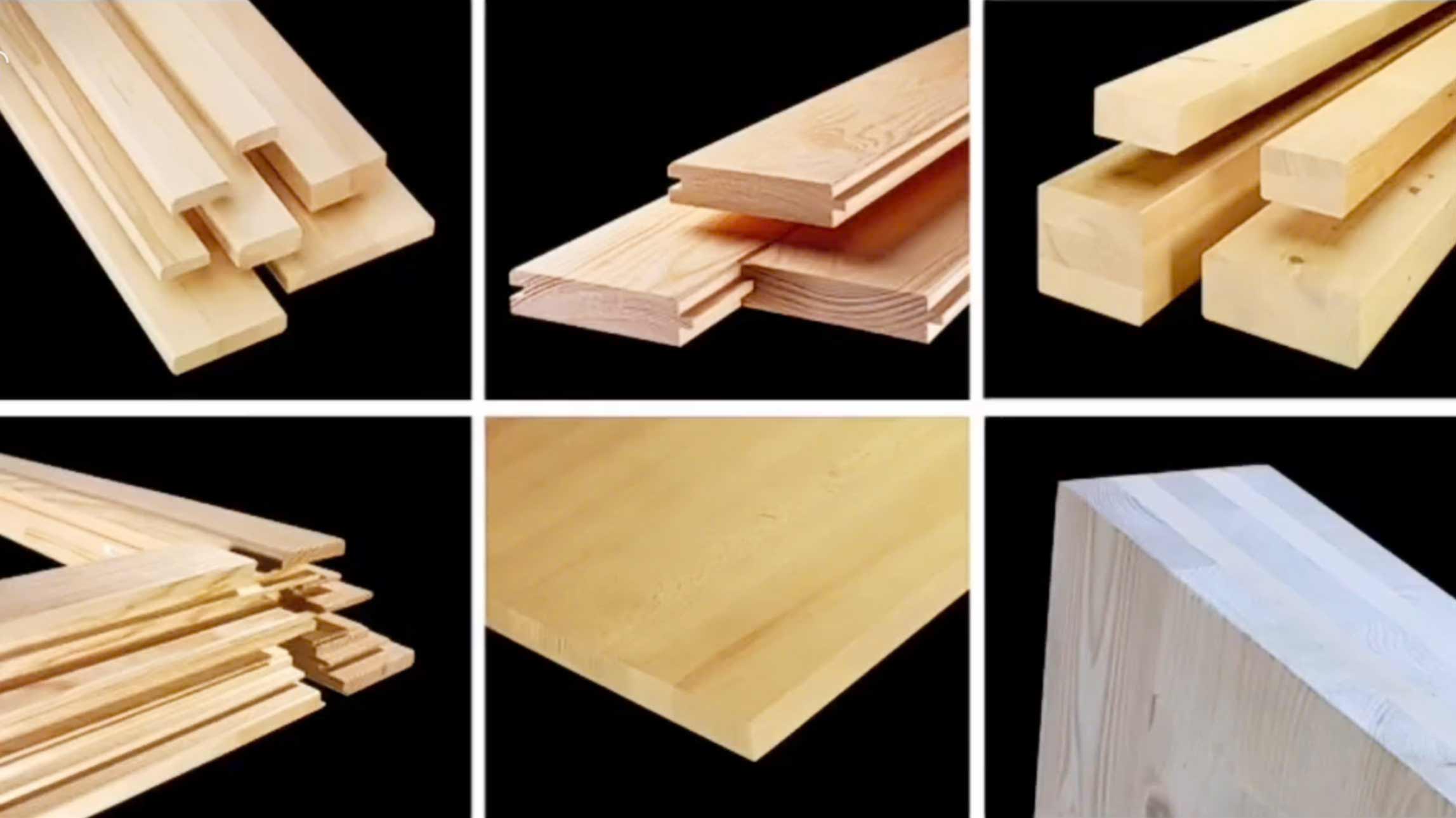
To ensure a solid and durable door structure, the frame construction must be reinforced through multiple assembled components such as the core frame, decorative moldings, and groove profiles.
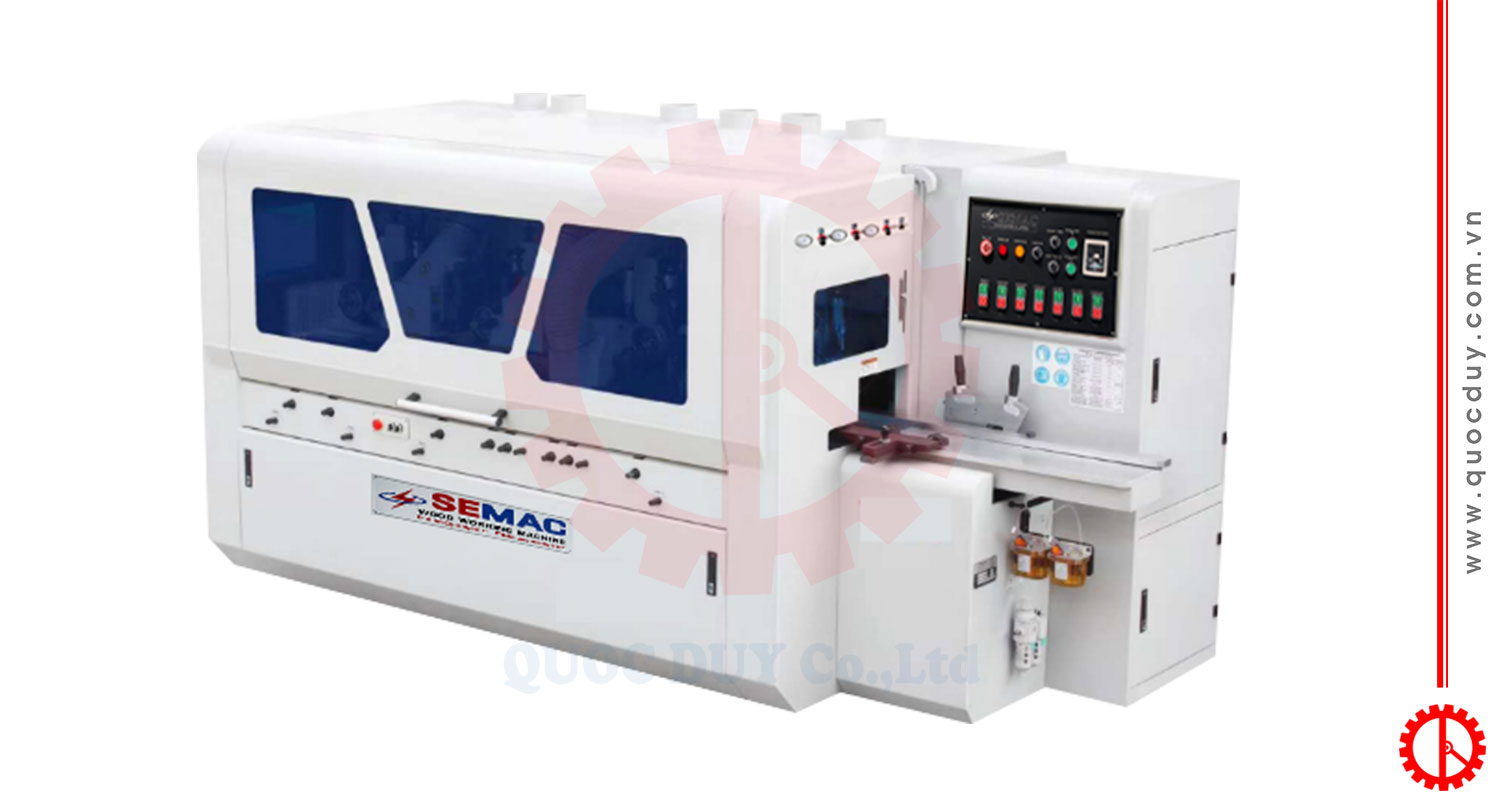
To meet these requirements, the 6-spindle four-sided planer completes each component in a single feed pass. Equipped with six cutter spindles, the machine can plane all four sides for precise calibration while simultaneously performing profile shaping, groove milling, and molding processing.
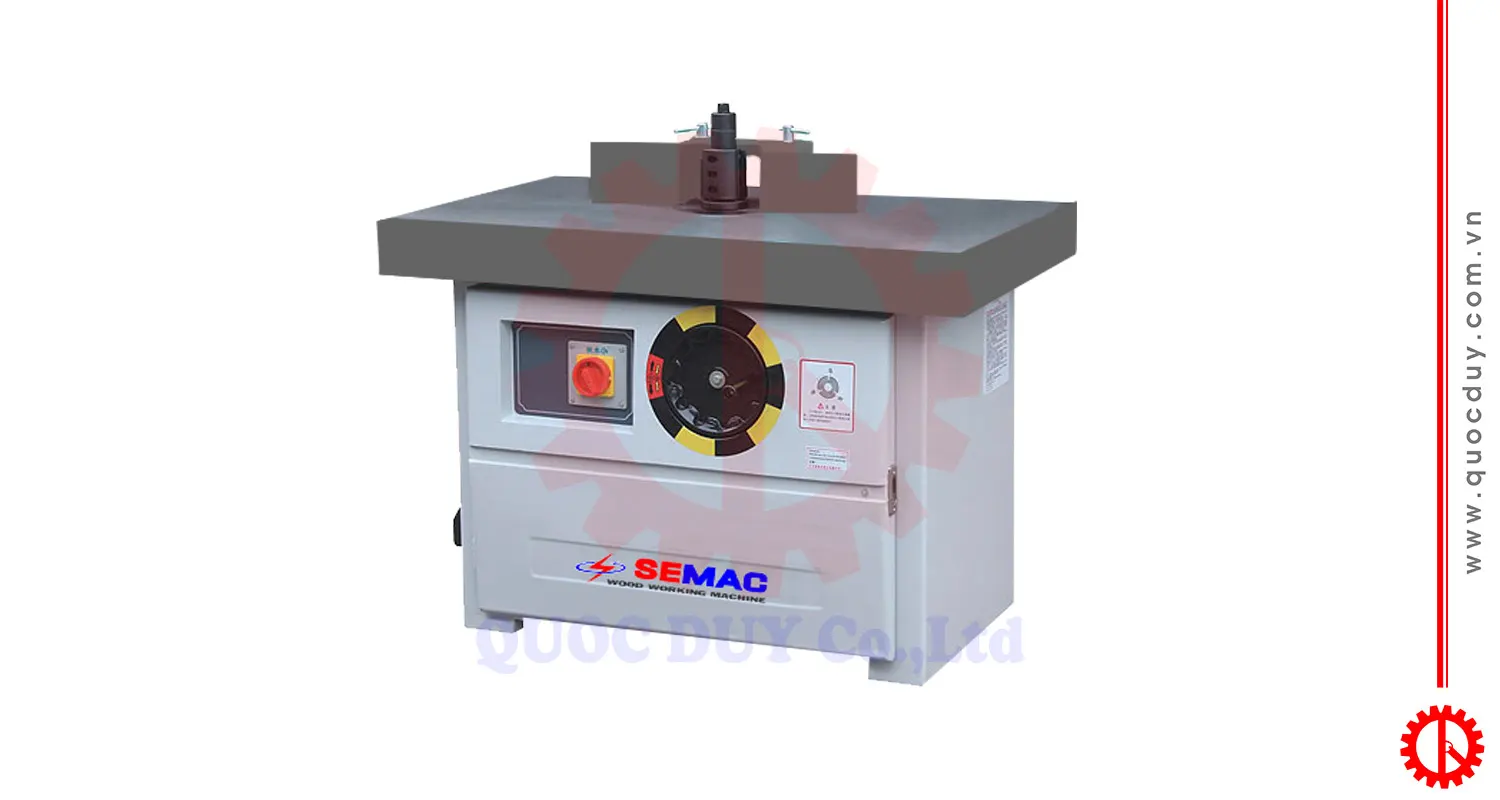
13. SINGLE-SPINDLE SPINDLE MOULDER – SM 155
Phào chỉ gỗ
The high-capacity finger-jointed wooden door production line recently introduced by Quoc Duy is an optimal solution for factories aiming to increase productivity, standardize quality, and optimize manufacturing costs.
For businesses seeking investment or requiring detailed consultation on production workflow, machine configuration, and door manufacturing technology, please contact +84 903 600 113 for in-depth technical support from our professional consulting team.
In addition to the finger-jointed wooden door line, Quoc Duy also provides a wide range of comprehensive solutions, including:
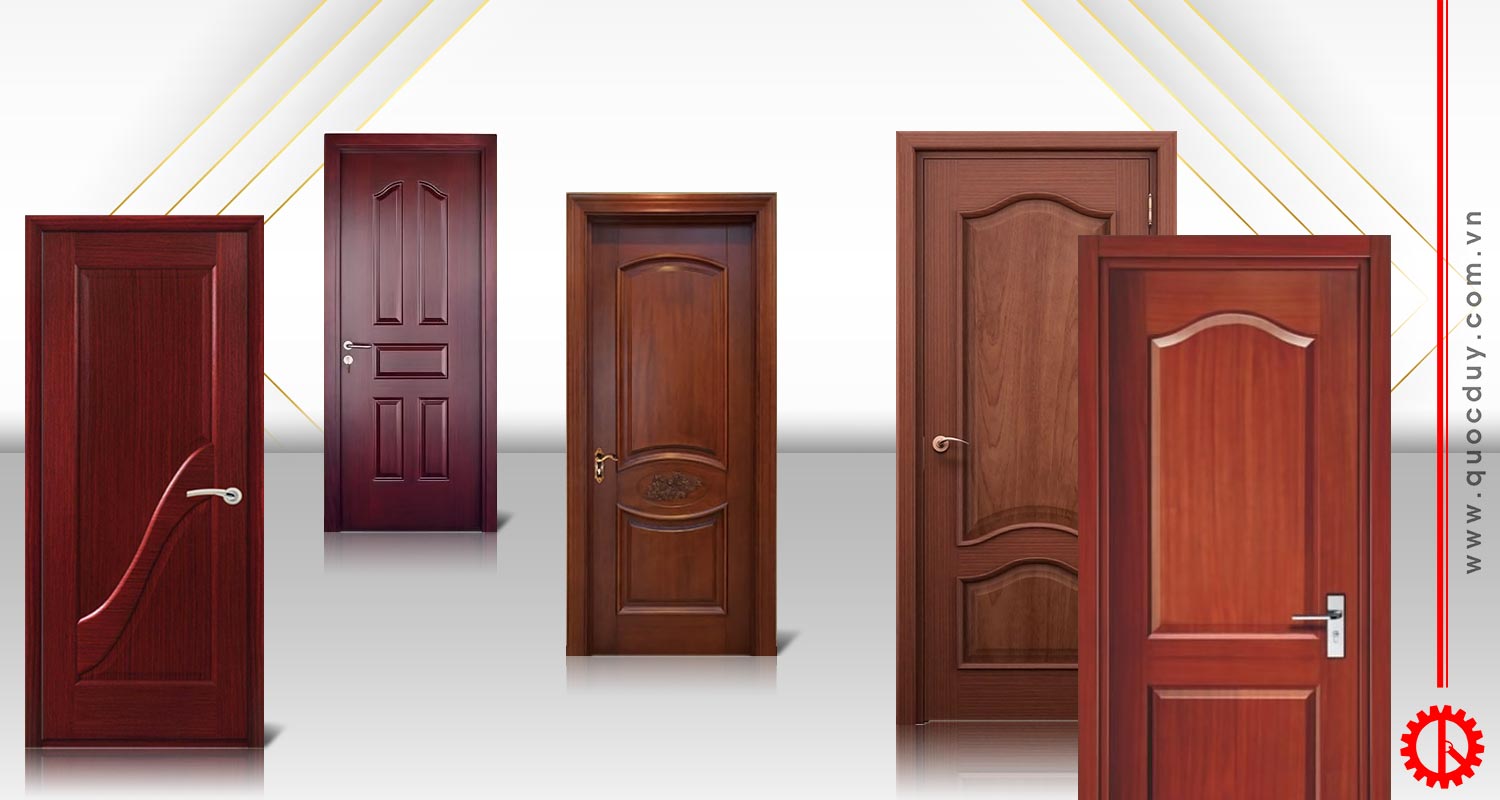
Industrial wooden door production lines
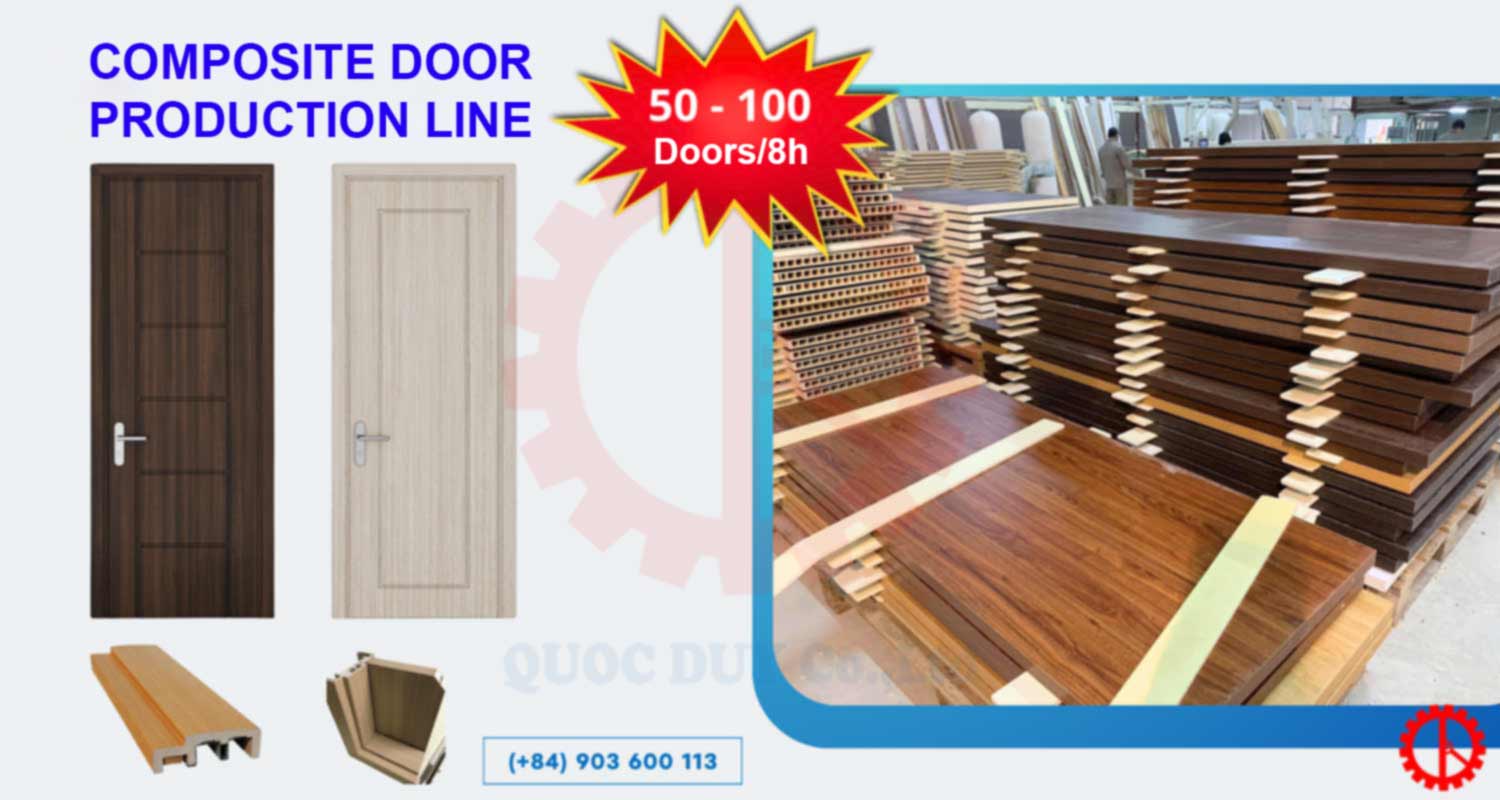
WPC (wood plastic composite) door production lines
Solid wood door production lines
And other customized manufacturing systems
Please refer to the detailed information below to select the most suitable solution aligned with your investment plan and long-term business development strategy.