


What equipment is required for a finger-jointed board production line with a capacity of 3–5 m³ per day?
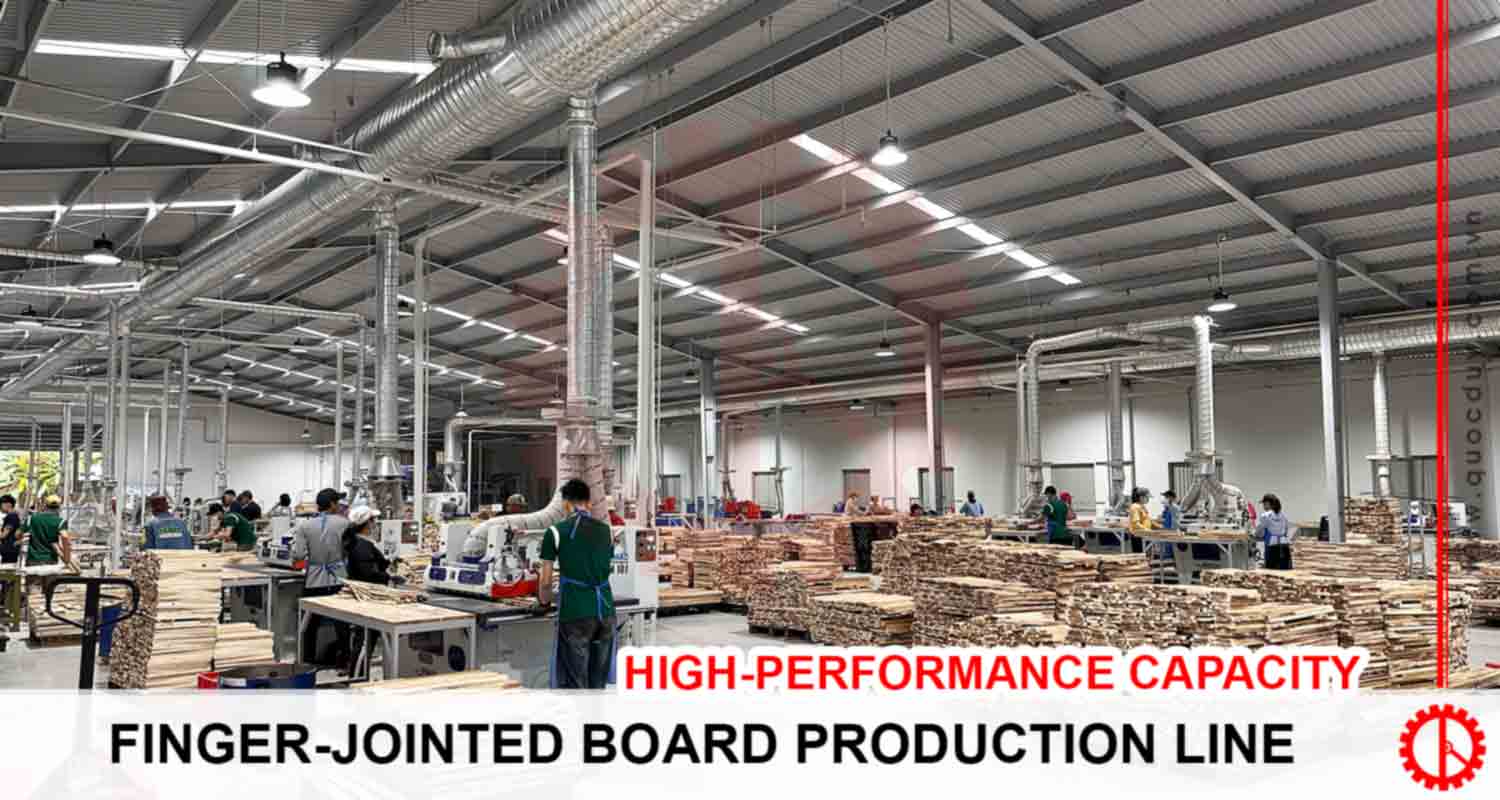
Following our previous article on a finger-jointed board production line with a capacity of 1–3 m³ per day, which received great interest and requests for more information on higher-capacity systems, Quoc Duy would like to introduce a medium-scale production line with a capacity of 3–5 m³ per day for your reference.
Overview of the production process diagram for a 3–5 m³/day finger-jointed board line
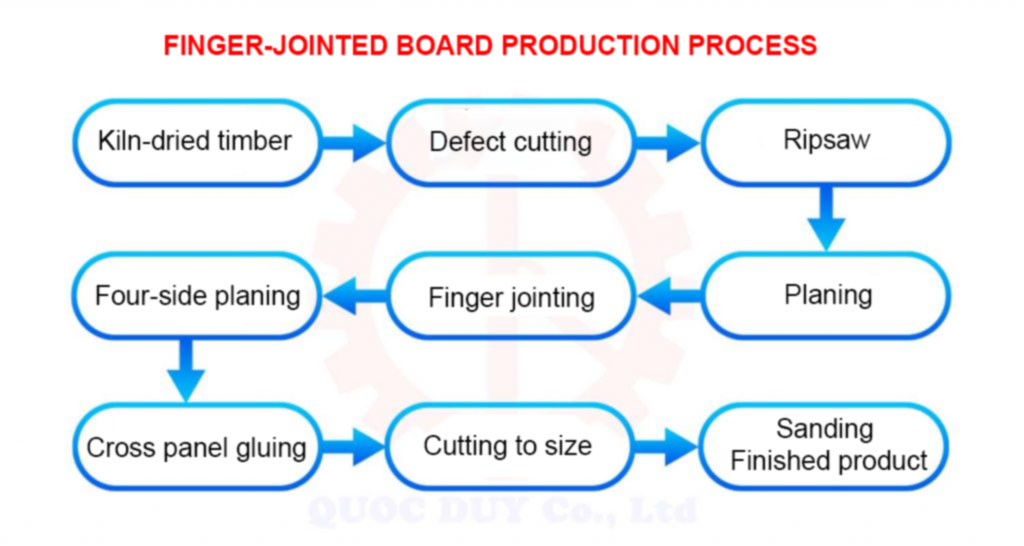
Based on the diagram, the process is divided into 9 stages of finger-jointed board production, making it easier for you to understand each step.
STAGE 1 STAGE 2 STAGE 3 STAGE 4 STAGE 5 STAGE 6 STAGE 7 Giai đoạn 8 STAGE 9Stage 1: Material Preparation
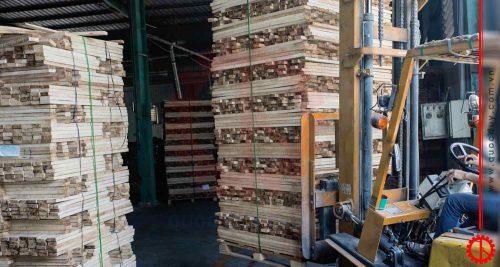
Common types of wood such as rubberwood, pine, acacia, xoan, oak, etc., are widely used in finger-jointed board production.
Therefore, these materials are processed through initial steps such as sawing, kiln drying, and cutting into various sizes and specifications.
We also have a detailed article on the raw material pre-processing procedure that you can refer to for more information.
Stage 2: Cutting & Defect Removal
After kiln drying, the wood blanks often have inconsistent dimensions, and some pieces may be warped or contain defective knots. Therefore, it is necessary to sort the materials and cut out defects to ensure the highest quality for the final finger-jointed panels.
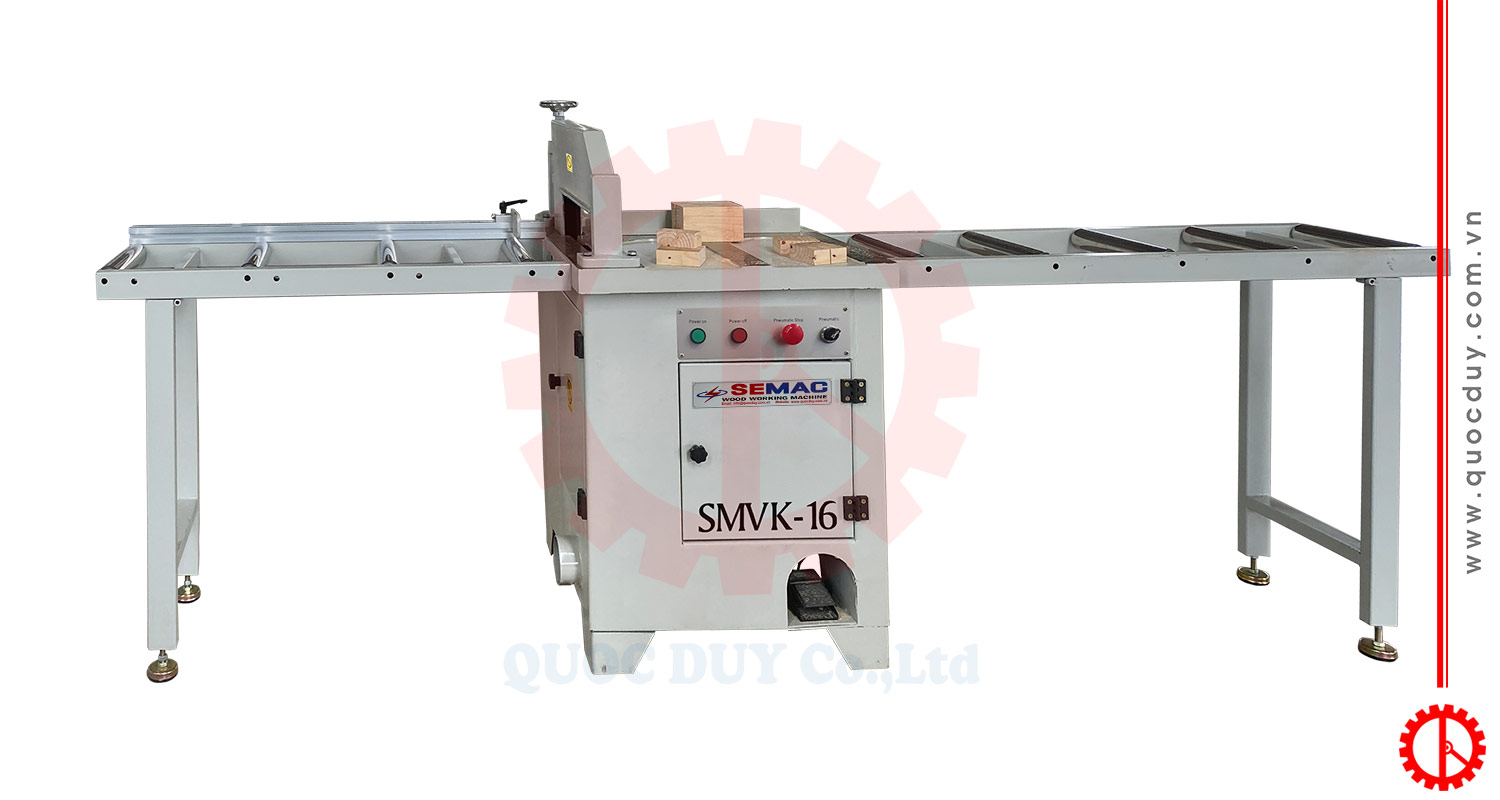
For a factory with a production capacity of 3–5 m³ per day, 04 SMVK 16 cross-cut saw machines are typically used.
AUTOMATIC CROSS CUT SAW – SMVK 16
This machine is designed to remove defects from wood blanks such as bad knots, warped sections, cracked or chipped wood.
- High-precision straight cutting
- Fast cutting speed – operated by only one worker
- Easy operation, simple handling, time-saving
- Equipped with a high-quality shock absorber system to minimize vibration to the lowest level
Stage 3: Edge Cutting
After the cutting and defect removal stage, to ensure uniform quality of the panels after jointing, the production line uses one light-duty bottom blade rip saw and one heavy-duty bottom blade rip saw.
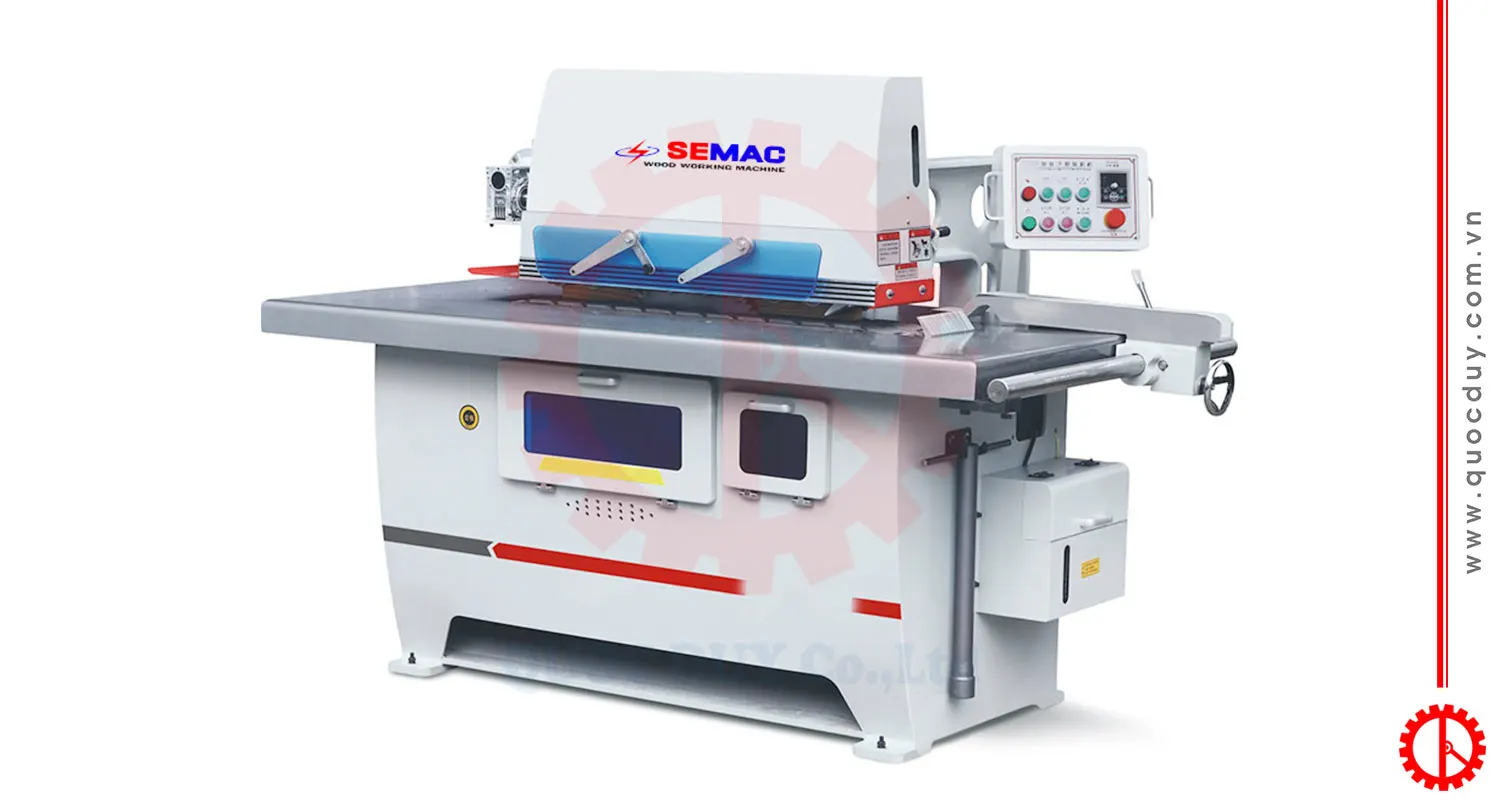
BOTTOM BLADE RIP SAW – SMVK 16I
- High-power cutting motor ensures fast cutting with a smooth finish
- Capable of processing most types of kiln-dried natural wood
- Maximum working thickness: 90 mm
- Total machine power: 10.5 kW
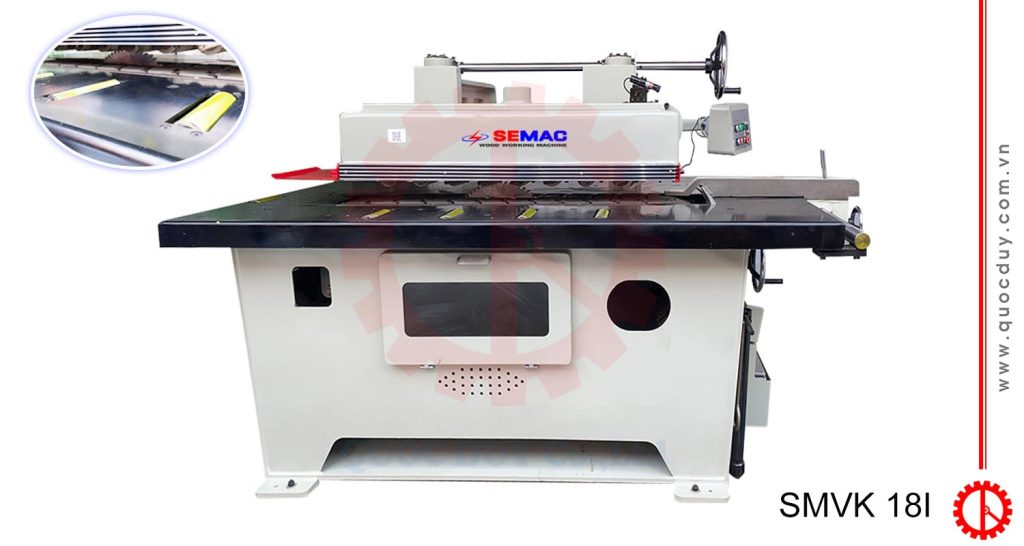
HEAVY-DUTY BOTTOM BLADE RIP SAW – SMVK 18I
- High-power cutting motor ensures fast cutting with a smooth finish
- Capable of processing most types of kiln-dried natural wood
- Maximum working thickness: 120 mm
- Total machine power: 17.5 kW
Stage 4: Surface Planing Process
After completing the edge trimming process, to ensure the wood blanks are more precise and uniform, they are transferred to the double-side planing stage (top and bottom surfaces).
At this stage, a double-sided planer with a spiral cutter head is used to achieve the highest level of uniformity for the material.
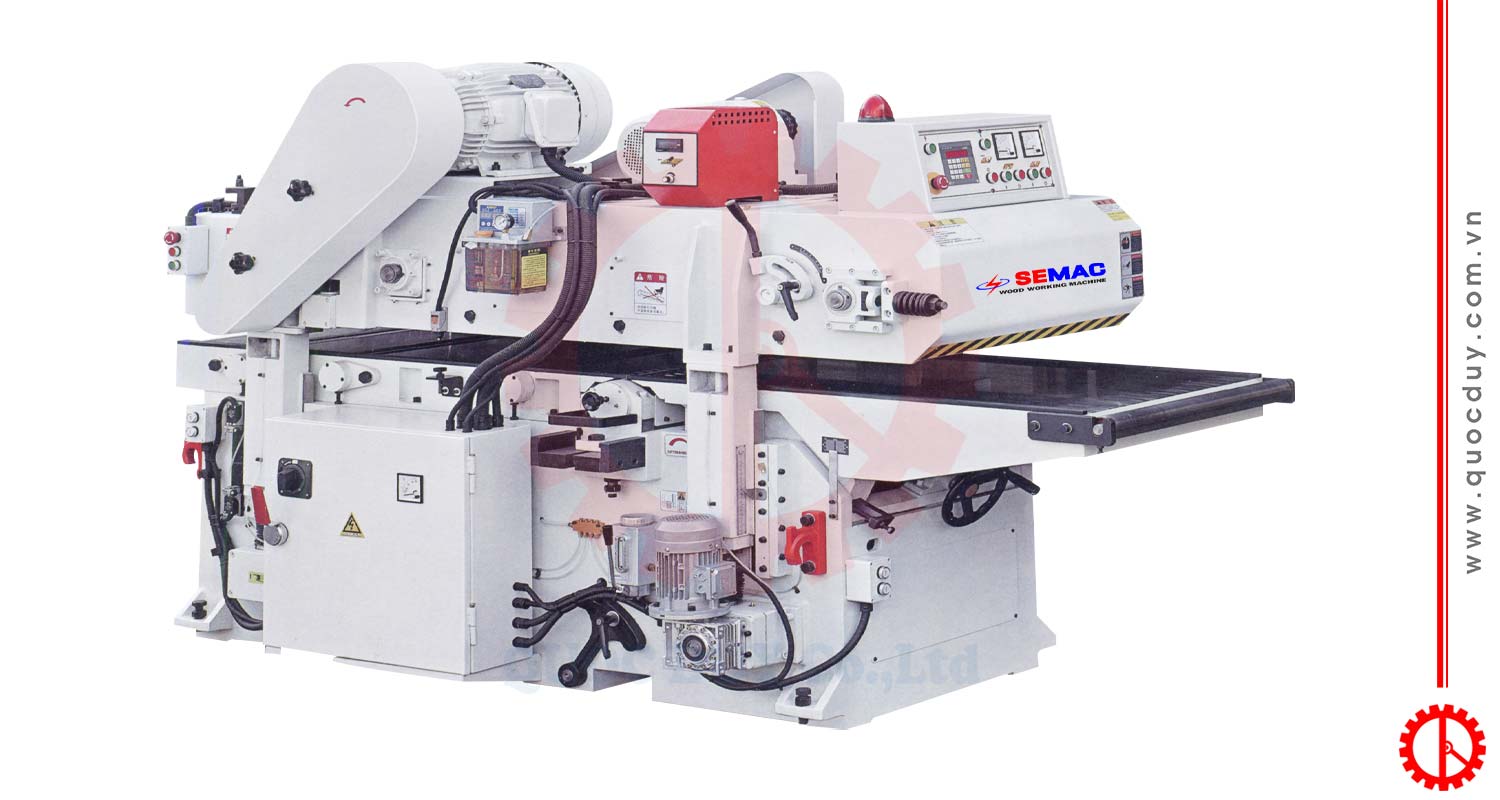
HEAVY-DUTY DOUBLE-SIDED PLANER – SM 635ARD
The SEMAC 635 mm double-sided planer with spiral cutter head is designed to plane both surfaces simultaneously, saving time in the surface preparation stage.
- High planing speed – delivers a smooth surface finish
- Spiral cutter head with small carbide inserts, each with 4 usable edges (rotatable when worn)
- Equipped with upper and lower feed rollers to continuously press and feed the material, ensuring stable and powerful feeding performance
Stage 5: Finger Jointin
After the wood blanks are fully prepared, they are transferred to the finger profiling and lengthwise jointing stage.
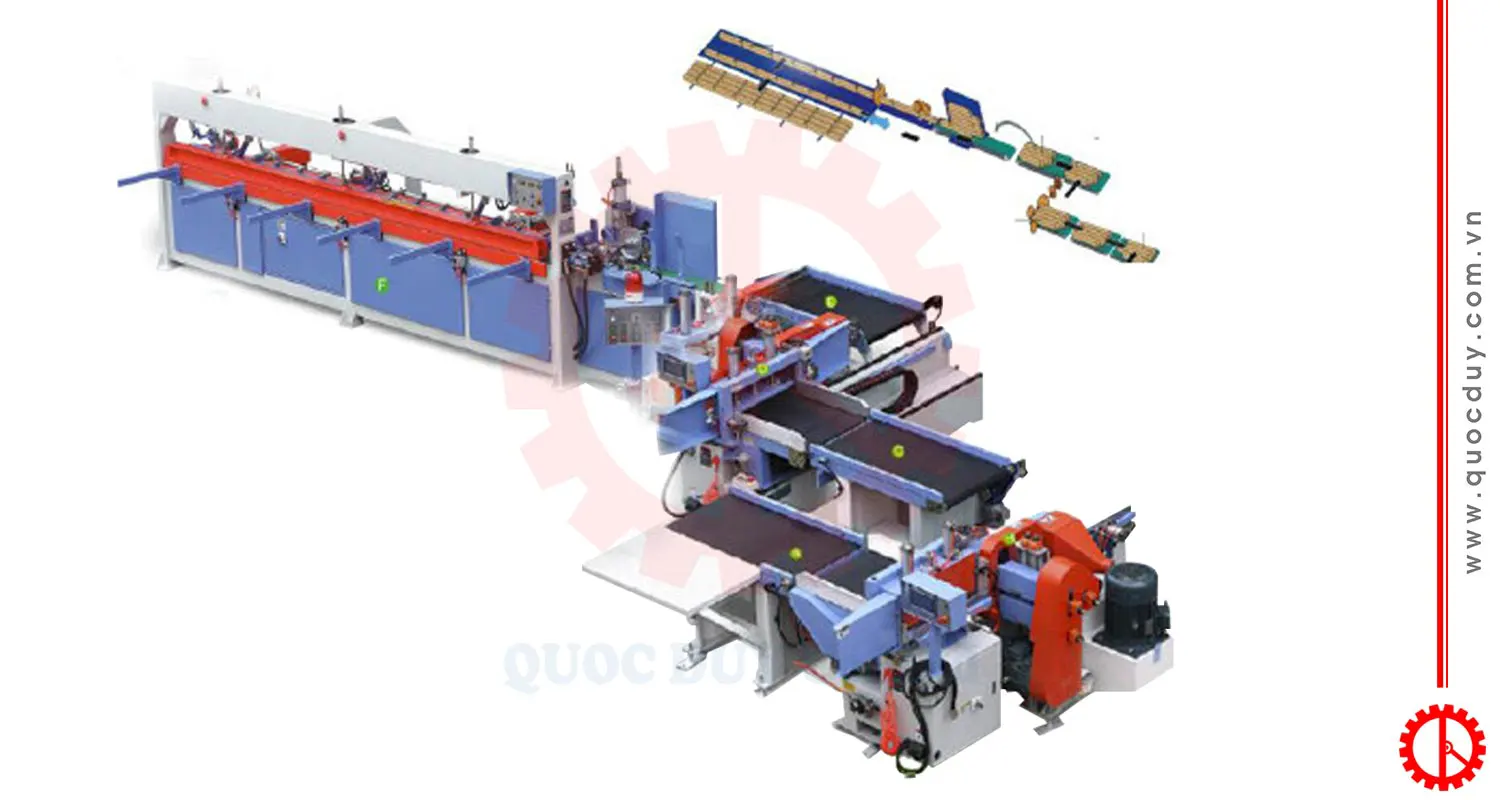
For a production capacity of 3–5 m³ per day, the line is typically equipped with one automatic finger jointing system.
AUTOMATIC FINGER JOINTING LINE – SMBL 3515II + 1560A
The SEMAC automatic finger jointing line, integrated with an automatic conveyor system, forms a highly efficient processing line.
- Equipped with 2 continuous finger profiling machines for high productivity
- Fully automatic process: feeding, finger profiling, glue application, and lengthwise jointing
- Flexible speed adjustment during operation
- Produces jointed timber lengths from 2 m to 6 m (extendable as an option
Stage 6: Four-Side Planing
After the wood pieces are lengthwise finger-jointed, they are planed on all four sides once again to ensure tighter joints and better uniformity when assembling into panels.
At this stage, one four-side planer with four cutter heads is used.
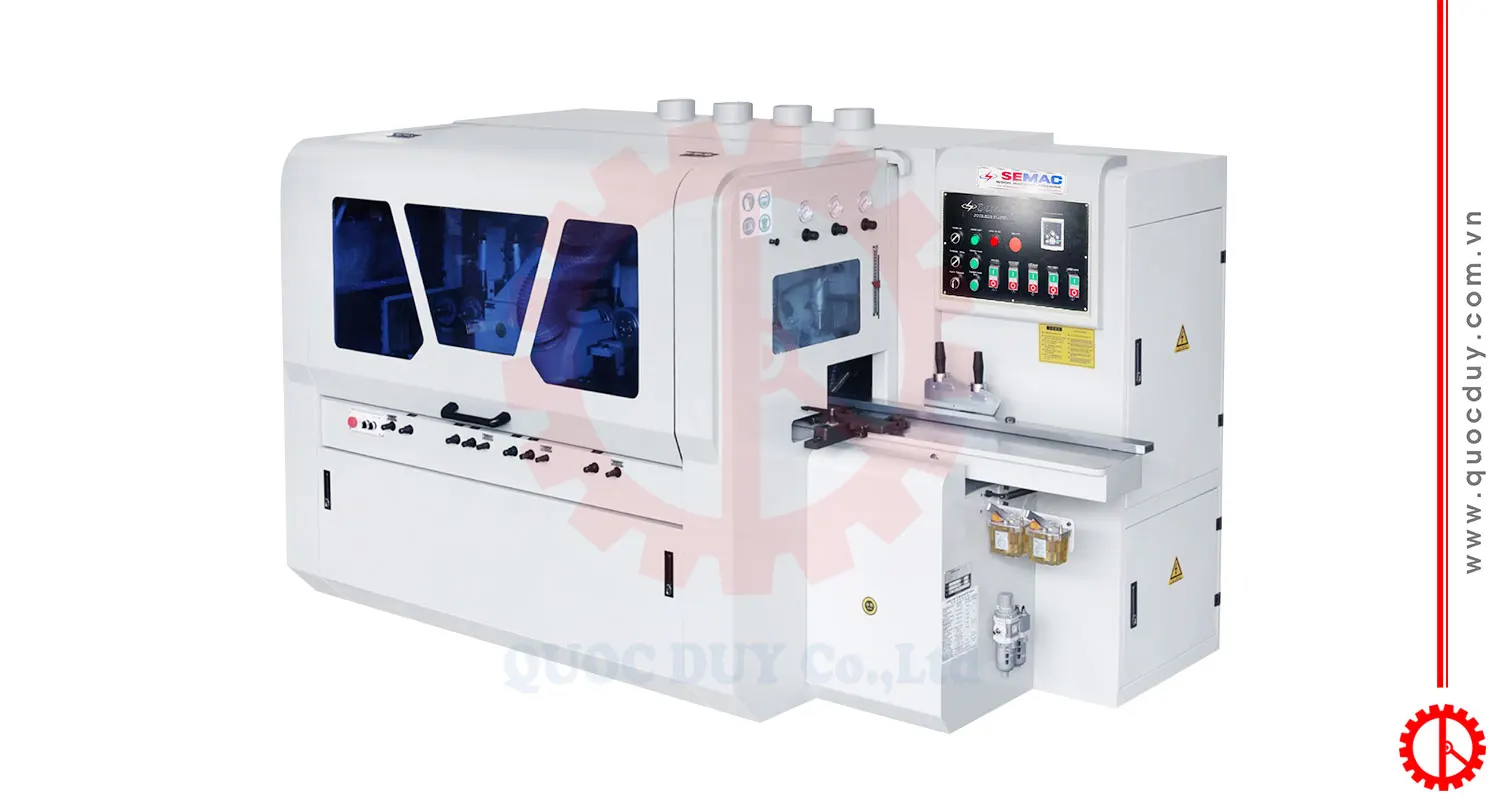
FOUR-SIDE PLANER – 5 SPINDLES – SMVK B518D
- Equipped with 5 high-speed cutter heads
- User-friendly control panel with simple push-button operation
- Single pass processing for smooth finishing on all four sides
- Efficient feed system with pressure rollers for fast and continuous material feeding
- Designed for easy knife replacement and machine cleaning
Stage 7: Cross Panel Gluing
After the wood strips have been planed on all four sides, they are transferred to the panel assembly stage.
At this stage, Quoc Duy recommends using a high-frequency panel pressing machine, which offers convenience, fast pressing time, and allows the panels to be used immediately after pressing.
HIGH-FREQUENCY PANEL PRESS – SM 84H35
The high-frequency panel press uses radio frequency (RF) heating to cure the glue rapidly, ensuring strong bonding between wood pieces. This significantly improves both pressing time and product durability.
- Equipped with a heavy steel platen combined with hydraulic pressure, ensuring flat panels with no warping
- Utilizes a closed-loop high-frequency system (self-generating – self-consuming), delivering high power and operator safety
- High-power RF generator dries the glue from the inside out, significantly reducing pressing time
Stage 8: Edge Cutting to Size
After the panels are assembled, they need to be trimmed on all four edges to the required dimensions.
At this stage, you can use a double-blade sliding table saw, or a more optimal solution is an automatic four-edge cutting machine, which helps maximize labor savings and reduce processing time.
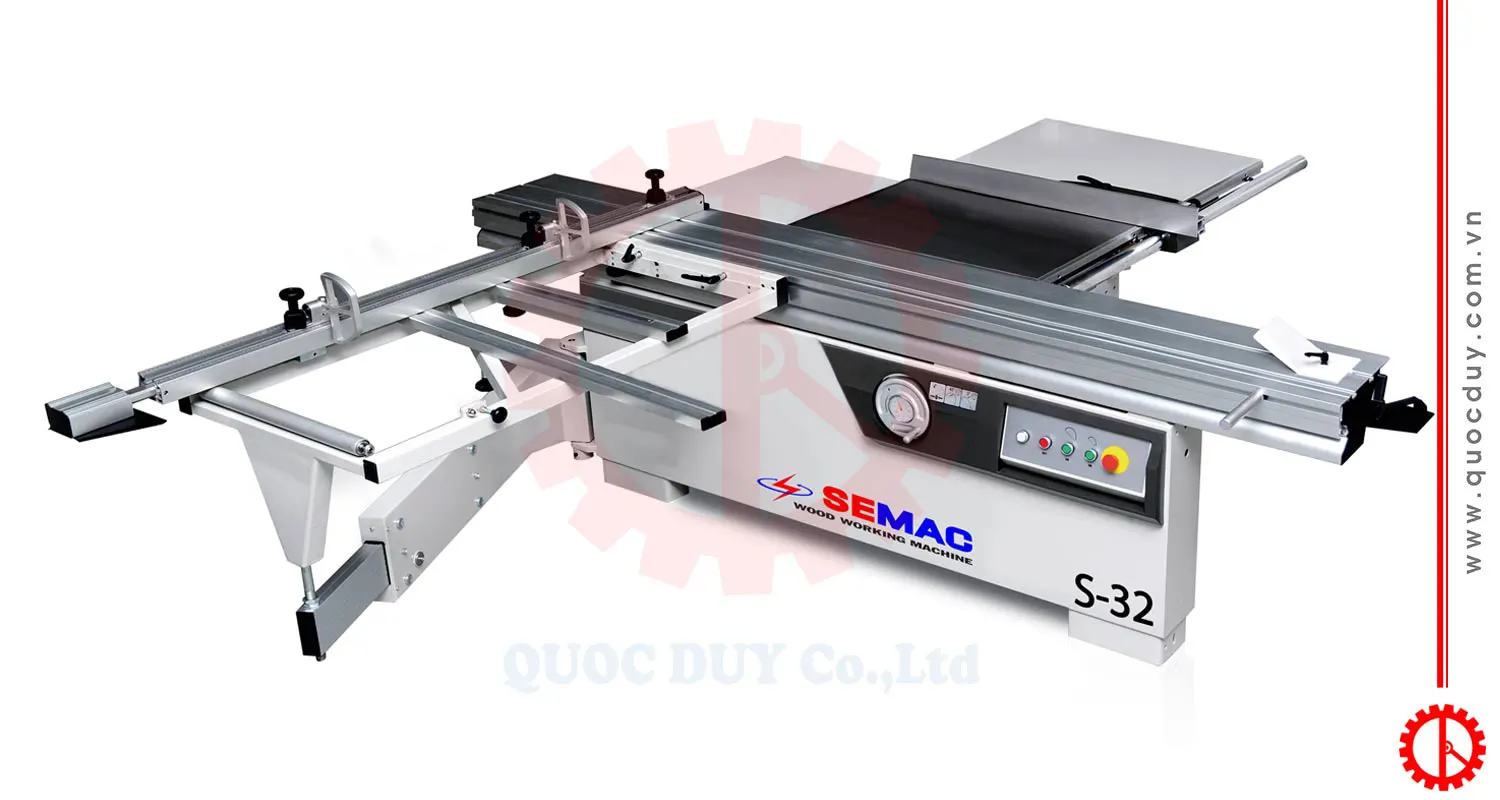
DOUBLE-BLADE SLIDING TABLE SAW 3200MM – S 32
- Components are selected from high-quality suppliers, with fully imported parts to ensure high durability and stability
- The sliding table system is designed for smooth and stable movement, featuring a round-bar guide rail for better performance
- The sliding table surface is made of aluminum alloy, and the machine frame is constructed from high-grade steel
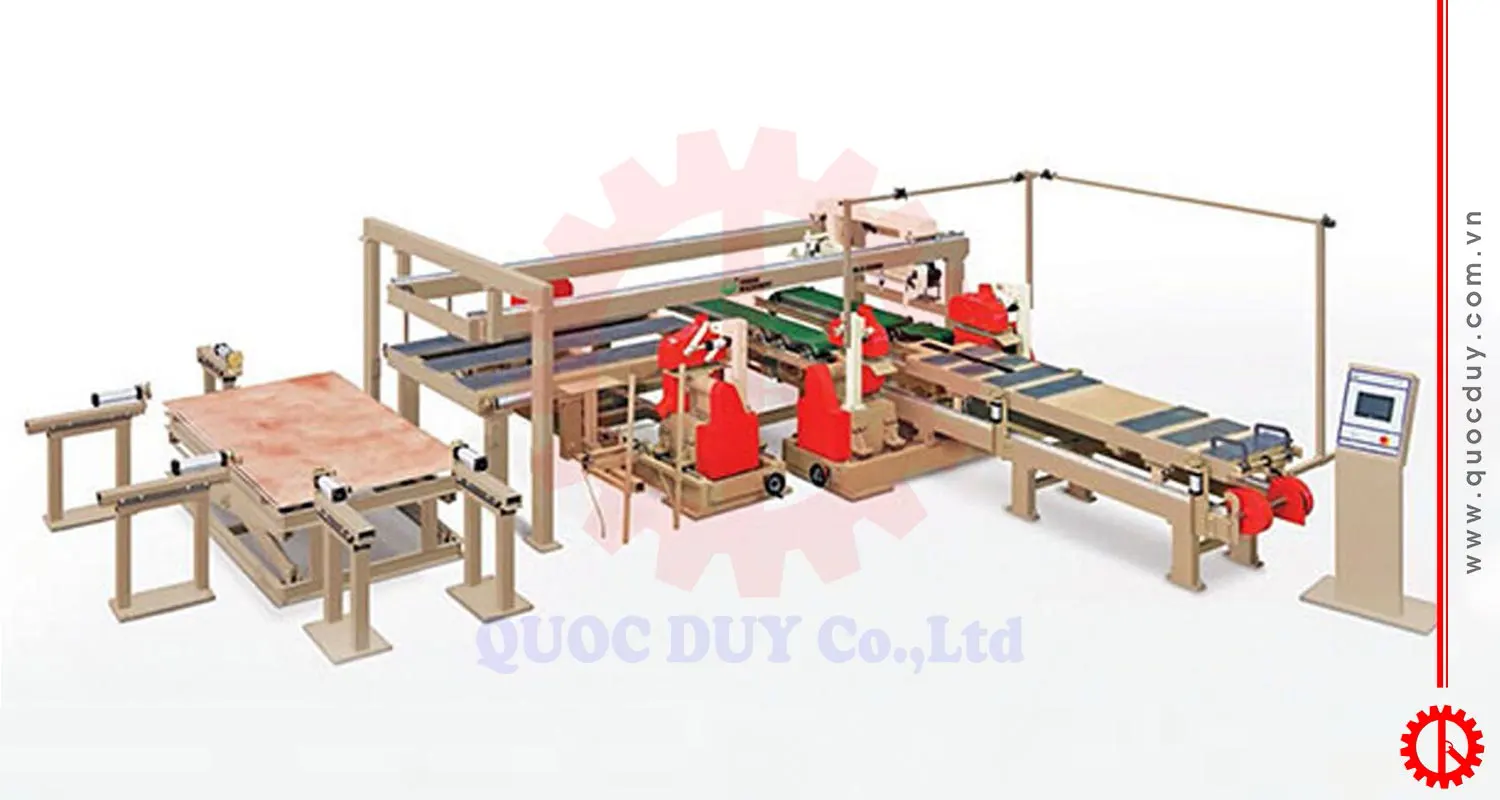
AUTOMATIC FOUR-EDGE PANEL CUTTING MACHINE – SM 6608D
- Equipped with a laser positioning system to define the cutting frame and control the product, allowing flexible sizing within the laser-guided area
- During operation, panels such as 1220 × 2440 mm and 915 × 1830 mm are securely held by clamping arms, reducing processing errors
- The operator only needs to load the panel, and the machine will automatically perform longitudinal cutting, cross cutting, and stacking of finished panels
Stage 9: Surface Sanding
After panel assembly, a layer of glue residue remains on the surface of the boards.
To remove this layer, the surface is smoothed using a wide belt sanding machine.
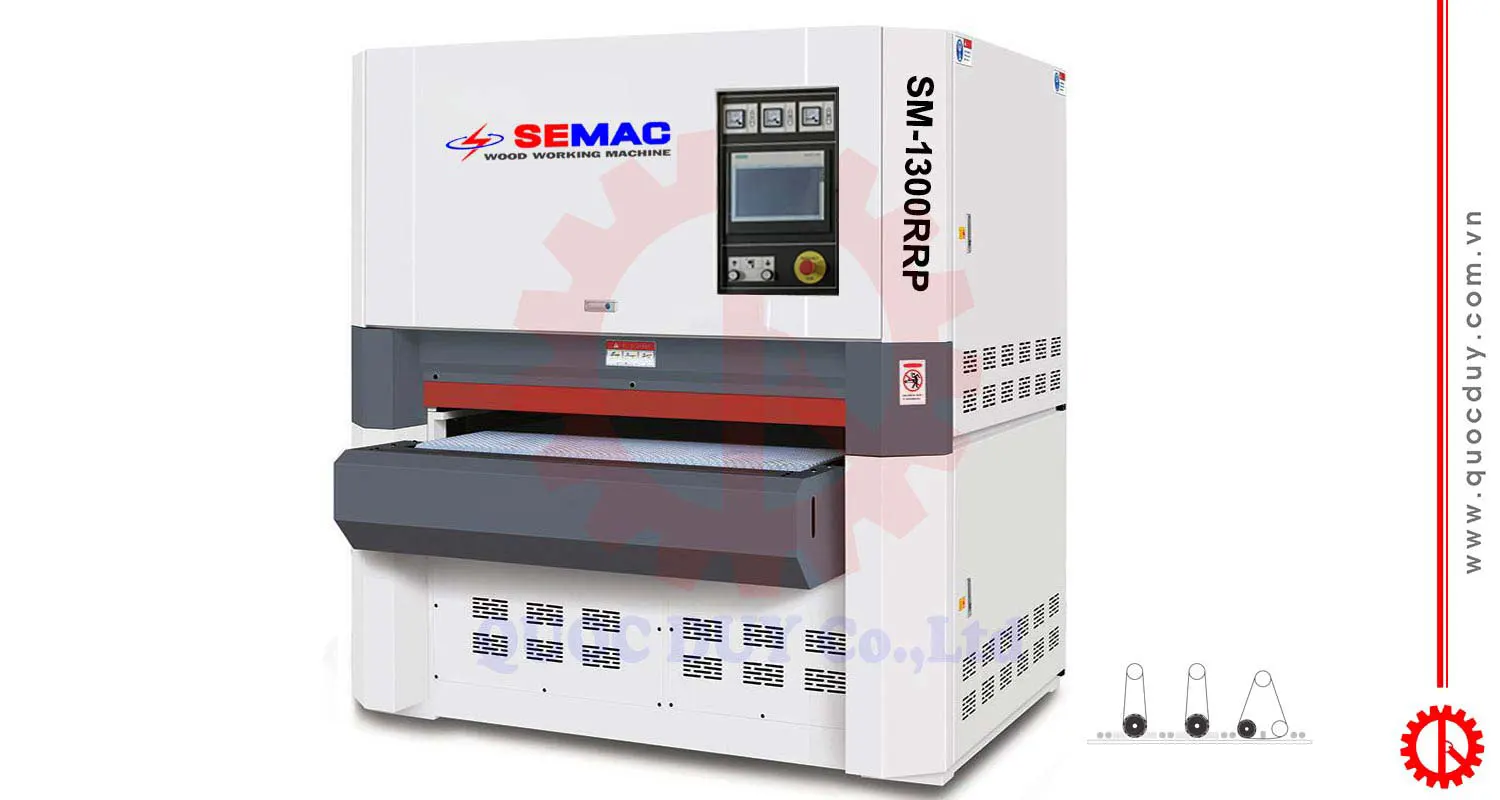
3-HEAD WIDE BELT SANDER 1300MM – SM 1300RRP
- Designed with a user-friendly interface, robust structure, and effective noise reduction
- Equipped with 3 sanding heads, delivering a high-quality smooth finish that meets even the most demanding requirements for quality and aesthetics
- Siemens inverter for easy speed adjustment and precise control
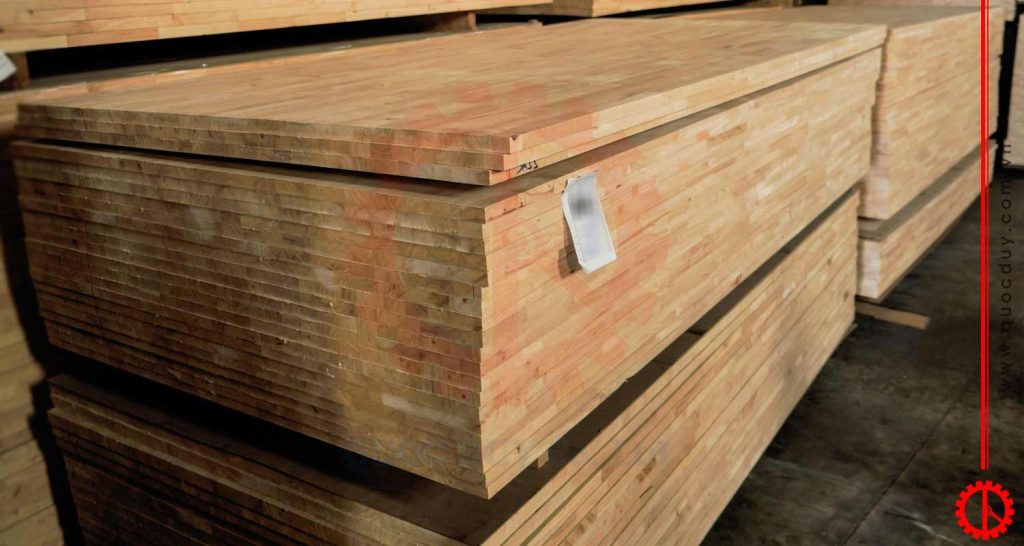
Finished Finger-Jointed Board
For any inquiries regarding finger-jointed board production lines or woodworking machinery, please feel free to contact Quoc Duy.
We are always ready to share, consult, and provide dedicated support.Hotline: +84 903 600 113
Email: info@quocduy.com.vn