



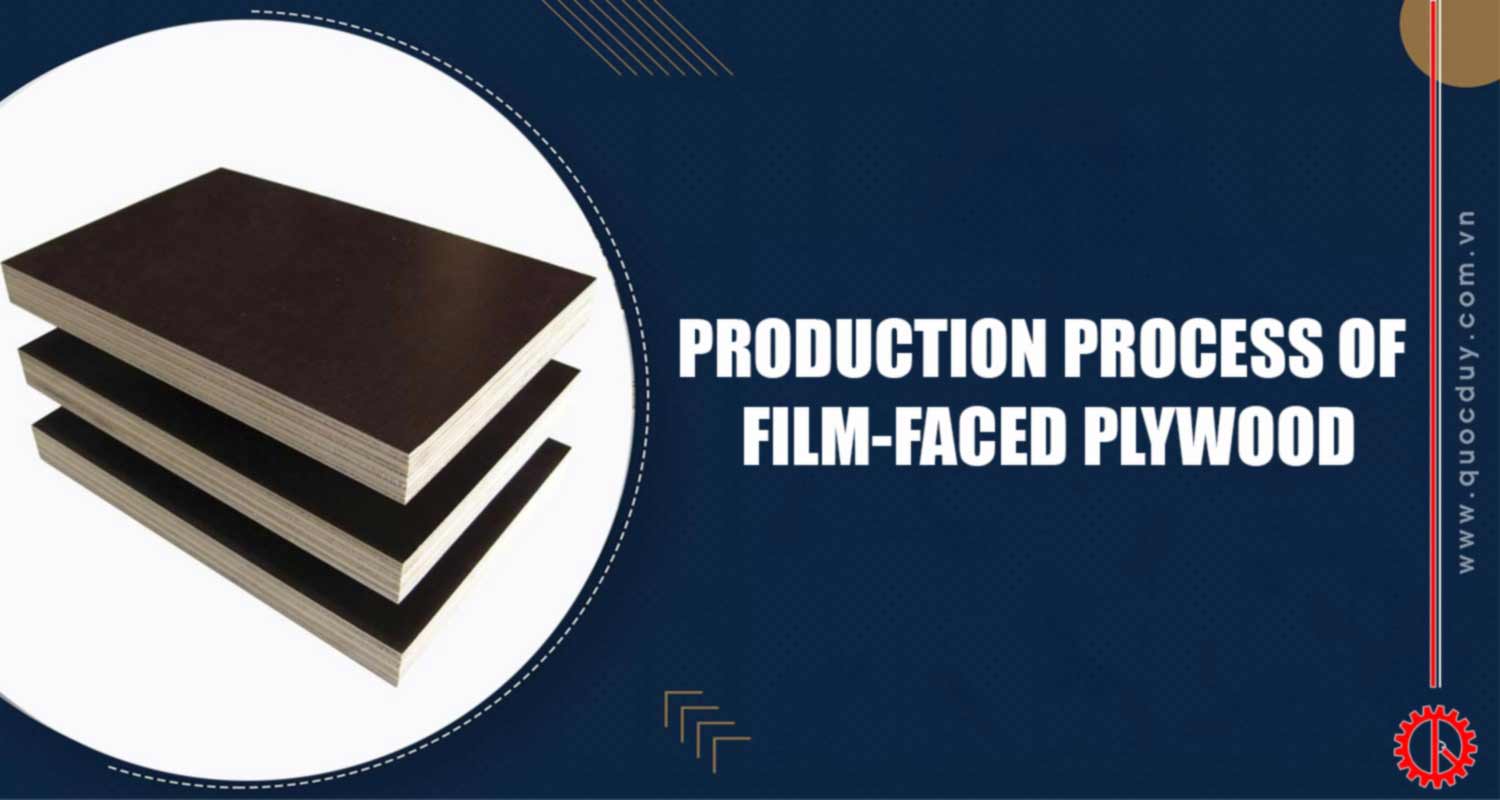
Film faced plywood production process is modern, high-capacity, helping to maximize labor savings. Join Quoc Duy to explore the article below!
Introduction to the film faced plywood production process
Film faced plywood is a material made from thin veneer sheets pressed together, with high durability, low cost, lightweight, and easy transportation. The production process is not too complicated but requires precision and quality assurance.
Structure of industrial film faced plywood
Film faced plywood is composed of:
Core layer: from plantation wood such as rubber wood, acacia, birch, pine, eucalyptus, processed into thin veneer sheets.
Glue layer: mainly Phenolic and Melamine adhesives are used. These adhesives not only bond the layers together but also provide water resistance, moisture resistance, and the ability to withstand extreme temperatures.
The surface layer often uses eucalyptus wood due to its relatively high density and good veneer quality.
The film layer is a phenolic-coated plastic film that prevents water absorption, provides a smooth surface to reduce scratches, and can be reused many times.
Machinery process for film faced plywood production
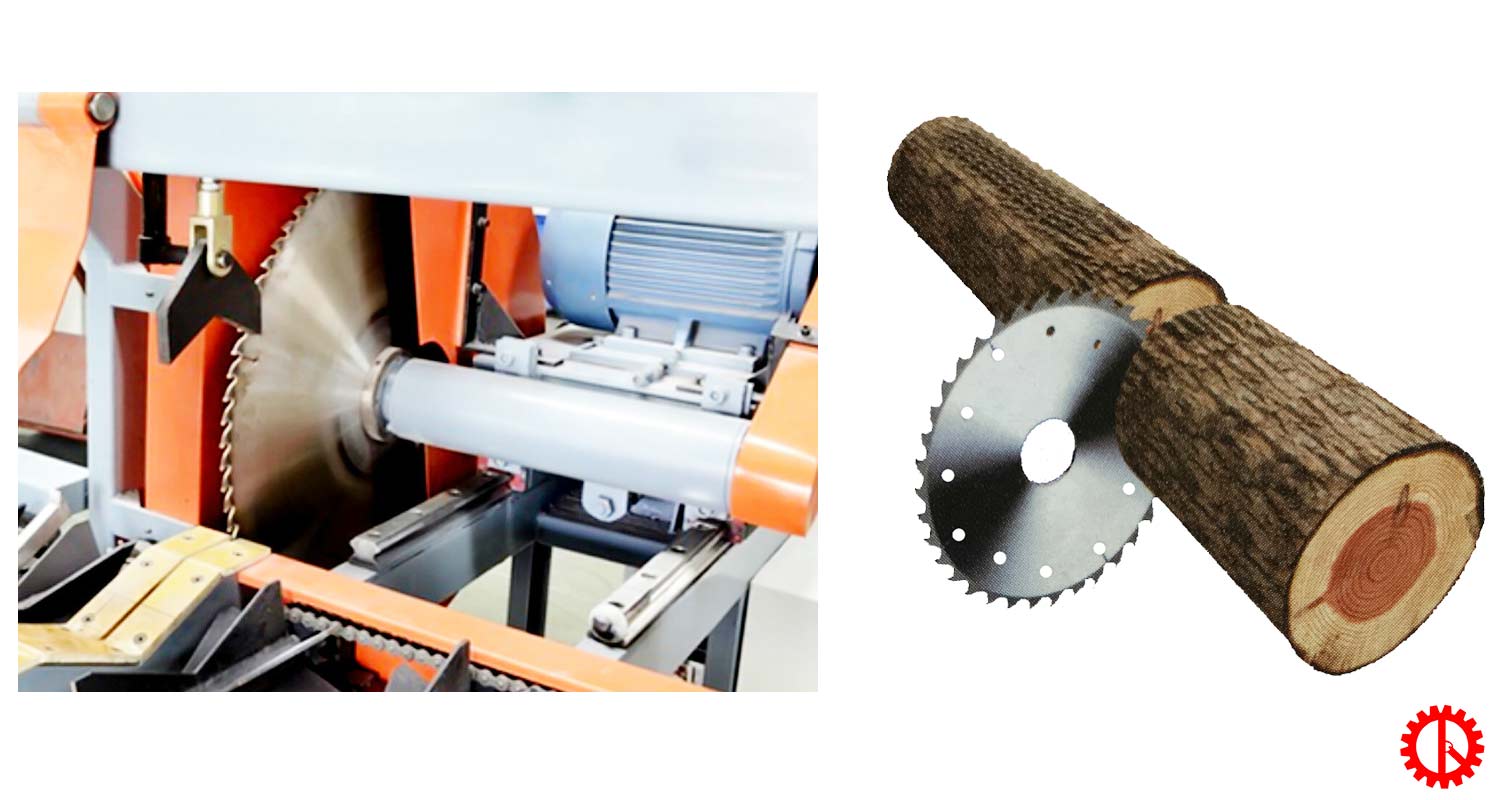
1.LOG CUTTING MACHINE BY SIZE
After harvesting, logs have different lengths. To save time and reduce processing steps, it is necessary to standardize the log sizes before peeling into veneer sheets.
>>> Reference : Fully automatic multi-blade log sawing process
2 LOG DEBARKING MACHINE
After being cut into equal-sized sections, the wood is fed into a debarking machine to remove the bark before moving to the next stage.
Advantages of the debarking machine include easy operation, high-speed performance, and smooth, clean results after peeling.
3. VENEER PEELING MACHINE
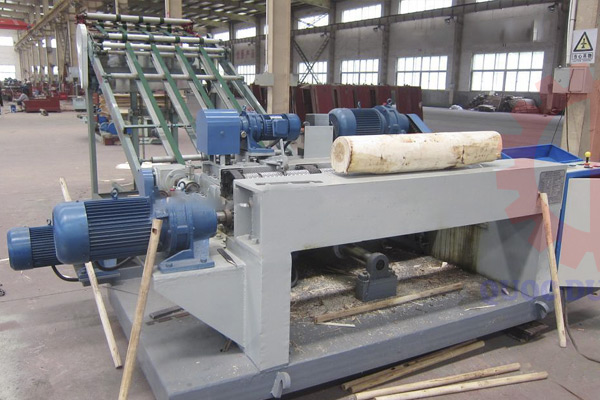
Debarked logs are fed into a 4-feet or 8-feet veneer peeling machine to produce thin sheets.
You can easily adjust the thickness of the peeled veneer and integrate with automatic feeding and output systems.
6.VENEER SPLICING MACHINE
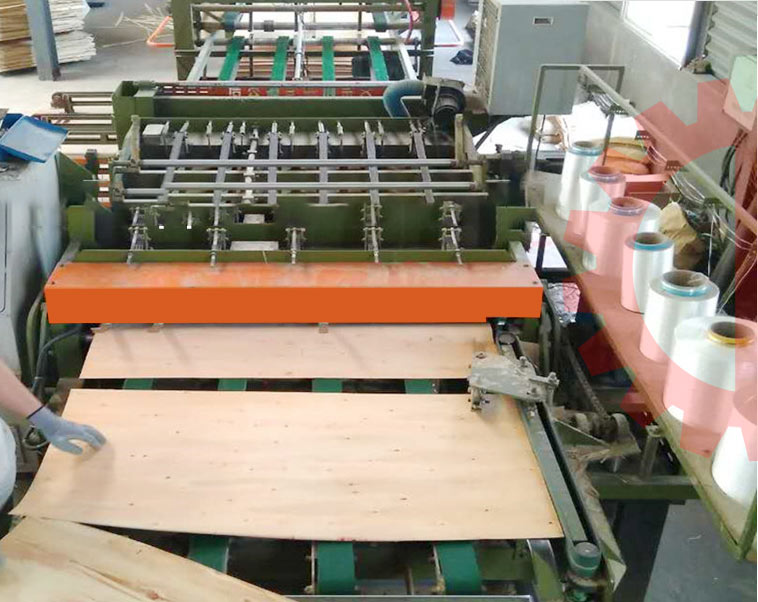
Joining veneer sheets together to form larger panels
4.VENEER CUTTING MACHINE
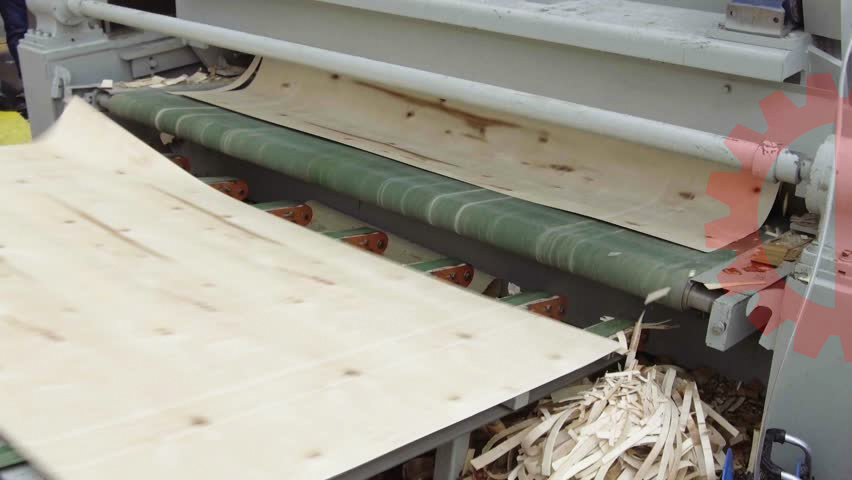
After peeling, veneer sheets need to be cut to size and squared before entering the drying system.
5. VENEER DRYING SYSTEM
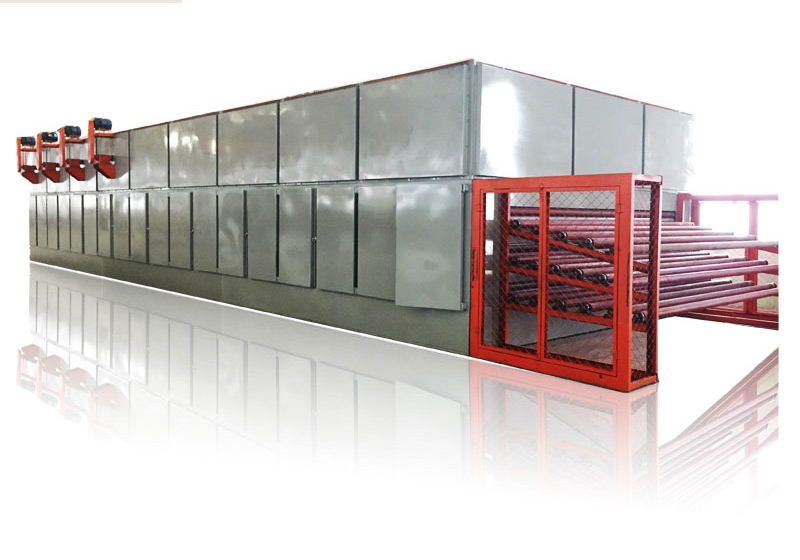
Drying veneer sheets helps with storage and enhances strength and heat resistance in different harsh environments.
Previously, without drying systems, companies used manual sun-drying methods. Although cheaper, it was time-consuming.
7.GLUE SPREADING MACHINE
Apply glue on both sides of veneer sheets to ensure strong bonding for plywood.
Using high-quality glue ensures user safety and shortens pressing time due to faster curing.
8.PANEL STACKING MACHINE
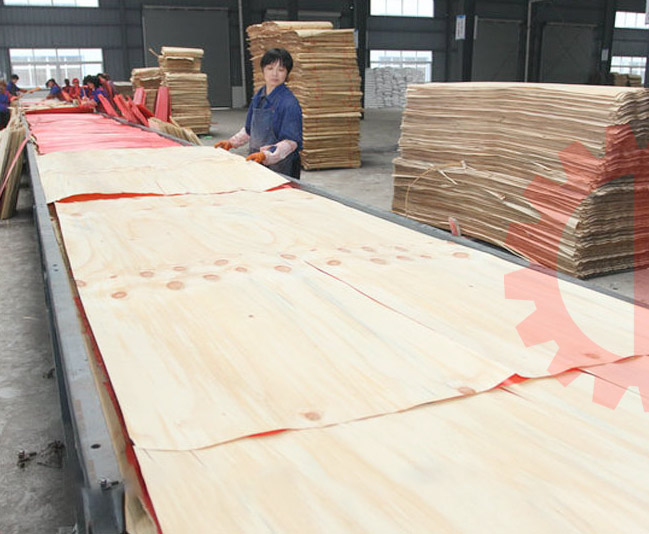
After glue application, veneer sheets are stacked perpendicular and aligned in the same grain direction to increase product strength.
Stacking veneers also creates visually appealing patterns, contributing to a modern aesthetic.
9.COLD PRESS MACHINE
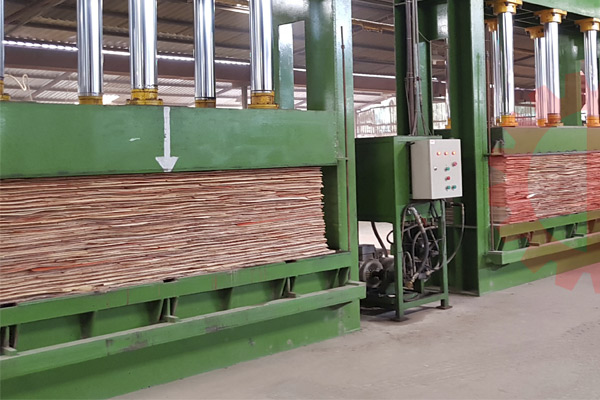
To enhance glue penetration and increase stiffness, veneer layers are pre-pressed using a cold press.
10.HOT PRESS MACHINE
After cold pressing, the product is transferred to a hot press to complete the plywood pressing process. Machines with 10 openings, 15 openings, etc. can be used.
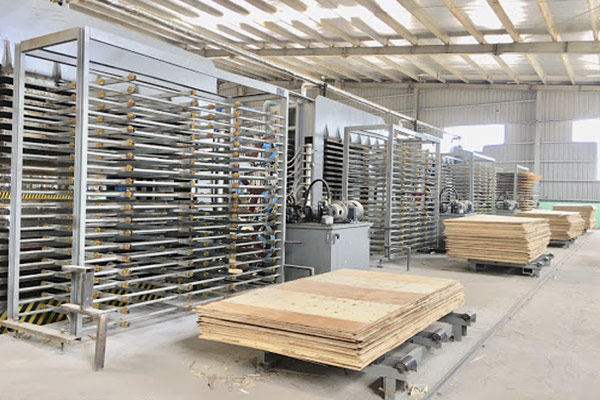
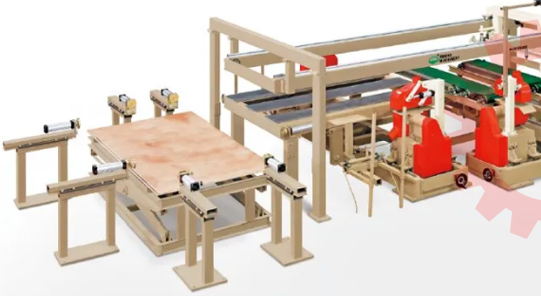
11.4-SIDE CUTTING MACHINE
This is the finishing stage where panels are cut on all four sides to achieve standard dimensions and smooth, straight edges.
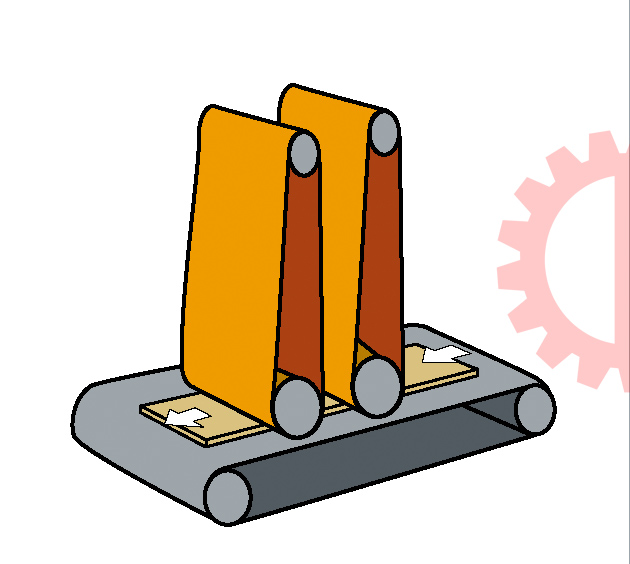
12.SANDING MACHINE
Sanding completes the aesthetic finish of the panel. Both sides are sanded smooth, and depending on requirements, glue coating or film coating can be applied for better preservation.
Reliable supplier of film faced plywood production lines
Thus, we have gone through the basic stages of the film faced plywood production process. This is only a general overview; to obtain a production line suitable for your capacity and budget, please contact Quoc Duy for detailed consultation.
- Email : info@quocduy.com.vn
- Hotline : 0903 600 113
You can also visit our factory directly at: 401 To Ngoc Van, Thoi An Ward, Ho Chi Minh City to observe the operation of the most modern machinery today.