


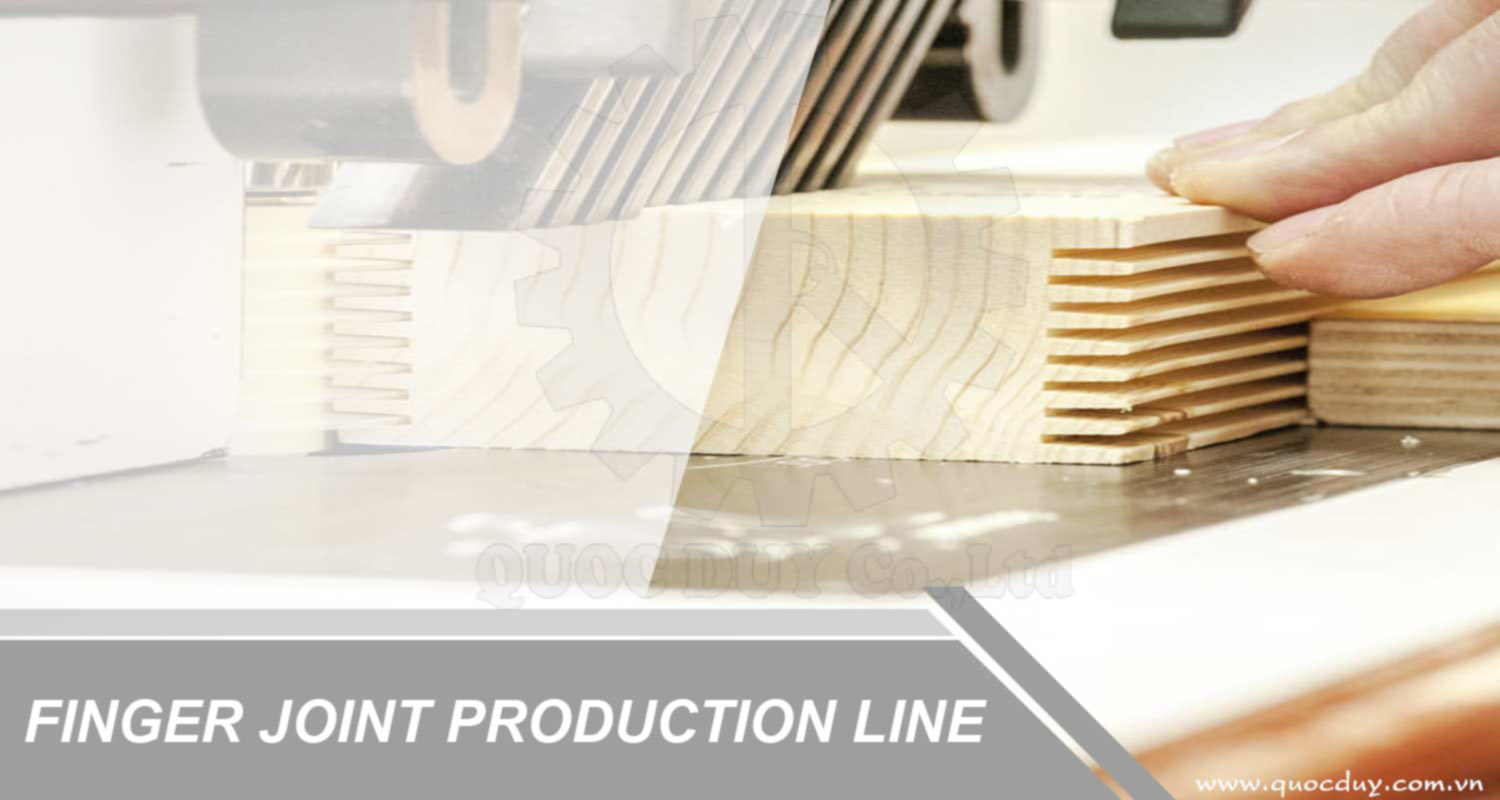
Finger joint production line, also known as a longitudinal jointing system or solid wood lamination process, is an ideal solution in today’s context of raw material shortages.
What is finger joint wood? Finger joint production process
What is finger joint wood?
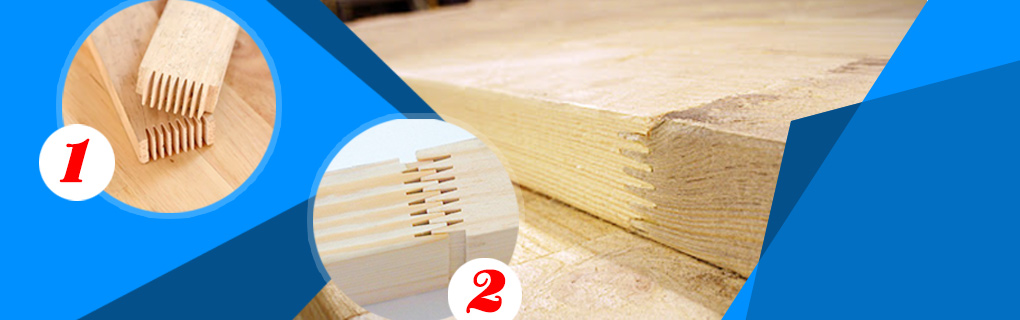
Finger joint wood is produced through a professional manufacturing process using two-component adhesive bonding. The process includes cutting raw timber, milling finger joints (comb-shaped joints), and joining pieces into long boards using specialized machines.
To help you better understand the production process, Quoc Duy provides a detailed overview of each processing stage and the suitable machinery.
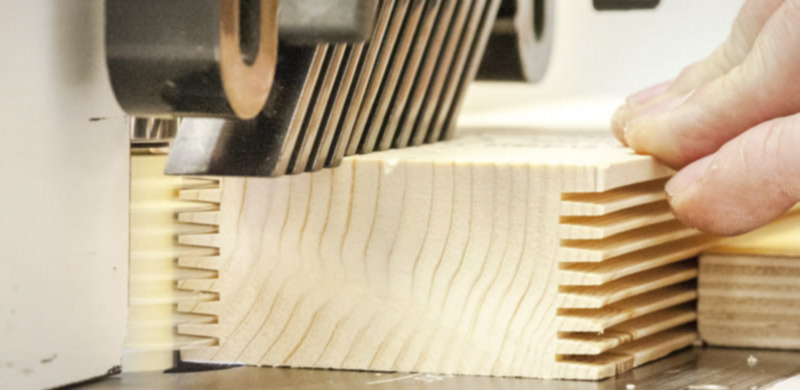
Suggested layout of finger joint production line for natural wood
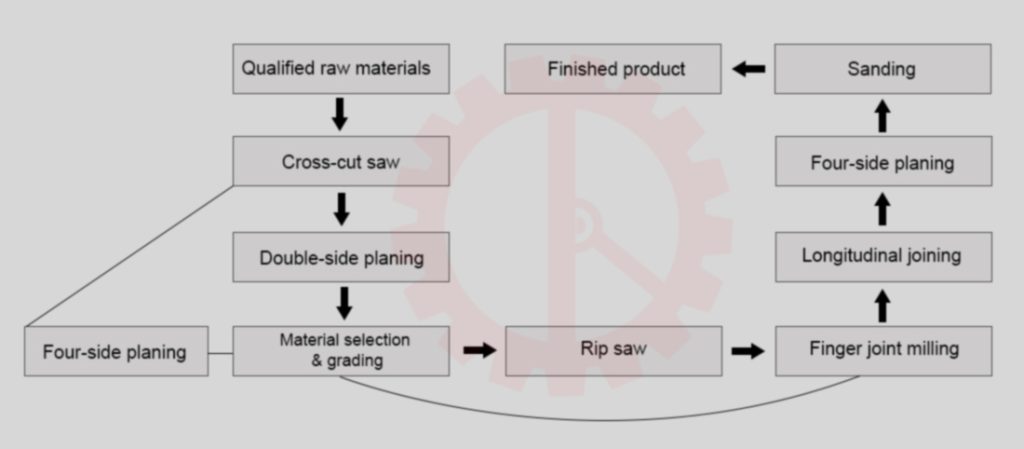
Key machines in a finger joint production line
▶ Stage 1: Cutting & material selection
At this stage, small and medium workshops can invest in basic cross-cut saws and surface planers.
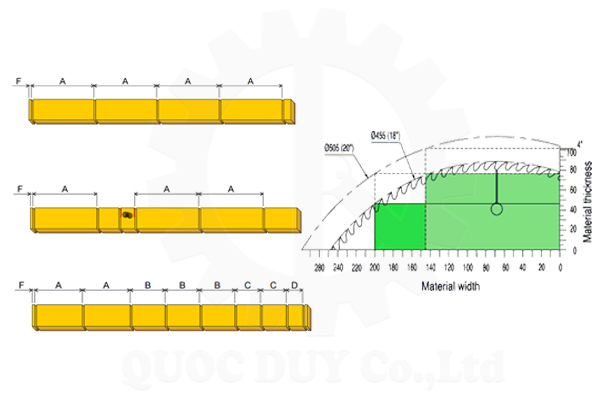
1. CROSS CUT SAW – DEFECT REMOVAL
Raw materials are cut to the required dimensions.
This stage removes defective wood, knots, and termite-damaged pieces.

2. DOUBLE-SIDE PLANING
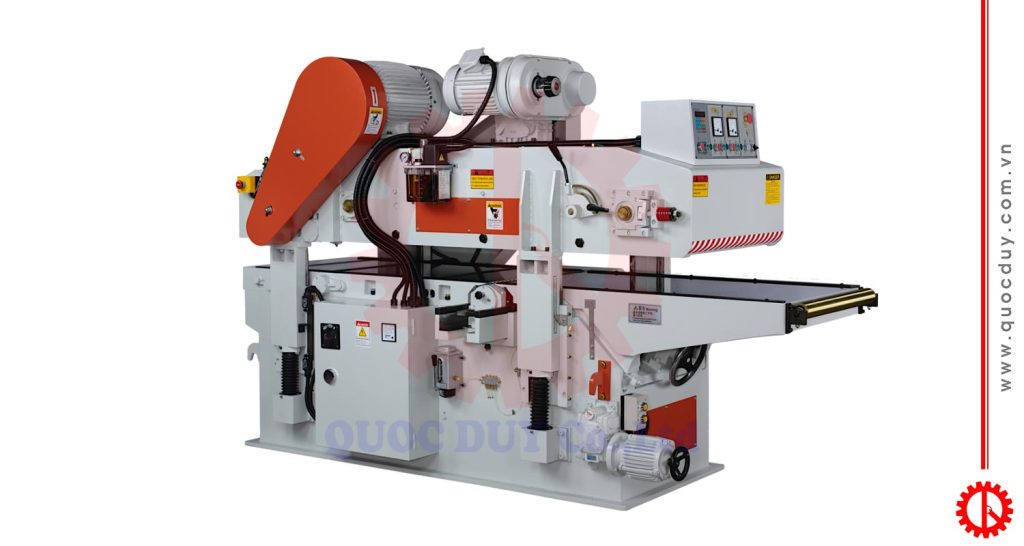
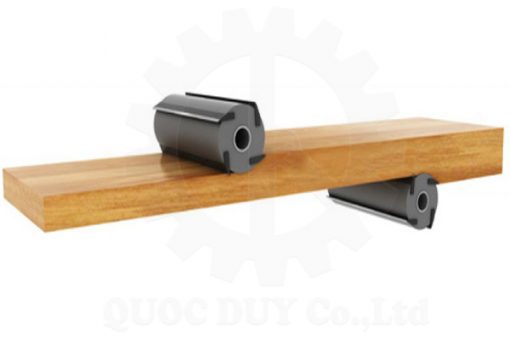
After material selection, both top and bottom surfaces are planed.
This ensures uniform thickness across all workpieces.
Two common machines: single-side planer and double-side planer.
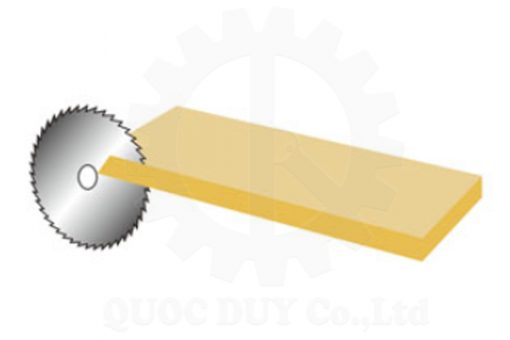
3. RIP SAW
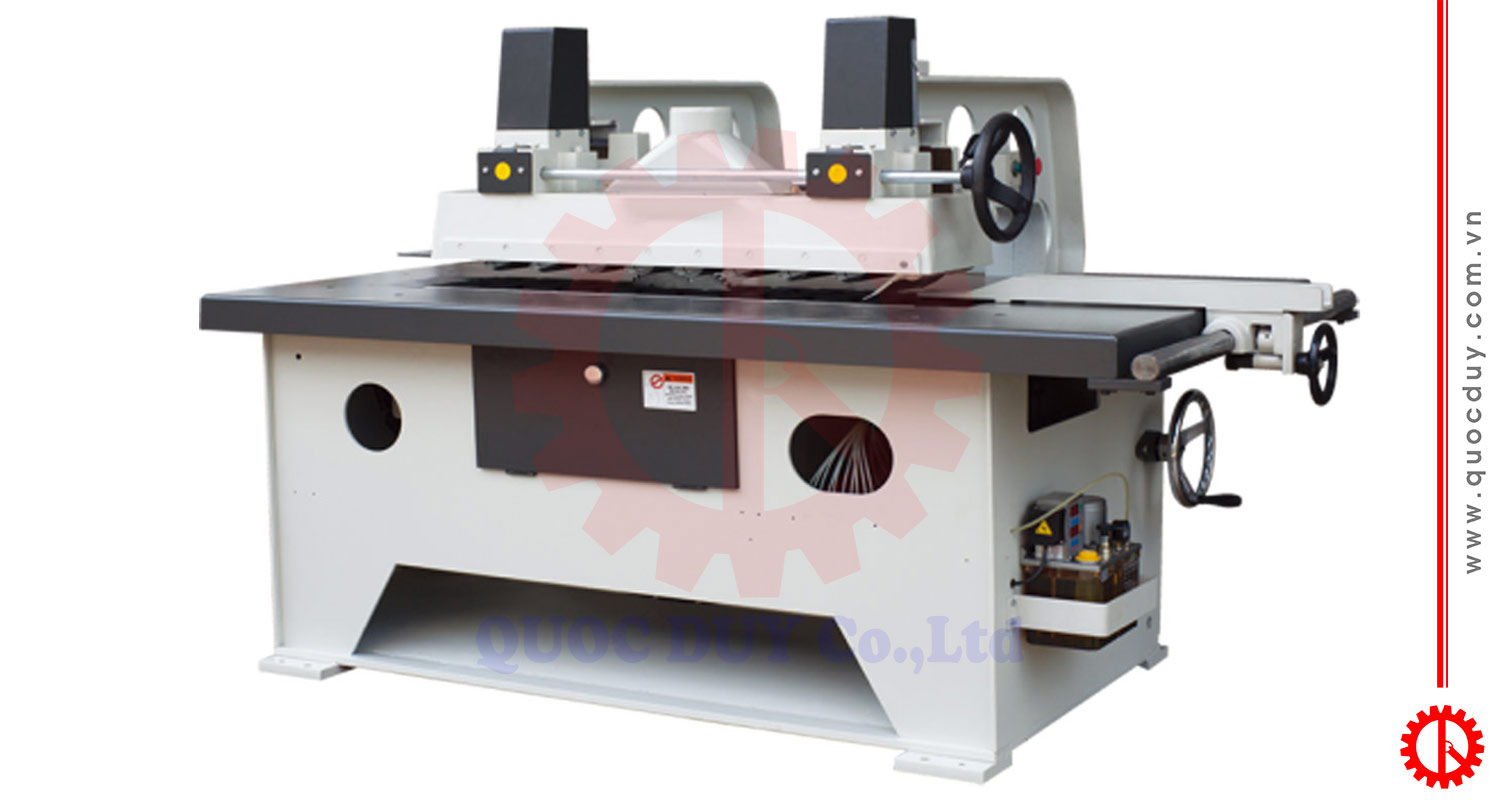
After sizing and planing, materials move to edge ripping.
The planer smooths surfaces, while the rip saw trims both edges of the wood.
▶ Stage 2: Finger joint milling & longitudinal joining
After preparation, materials move to joint milling and joining stages using finger joint milling machines and longitudinal jointing systems.
4. FINGER JOINT MILLING
Selected materials are processed to create finger (comb-shaped) joints.
Automatic finger joint machines precisely create joints for strong bonding.
Quoc Duy offers two types: standard finger joint machines and integrated glue application machines.
A finger joint machine structure includes a trimming saw blade and finger milling cutters.

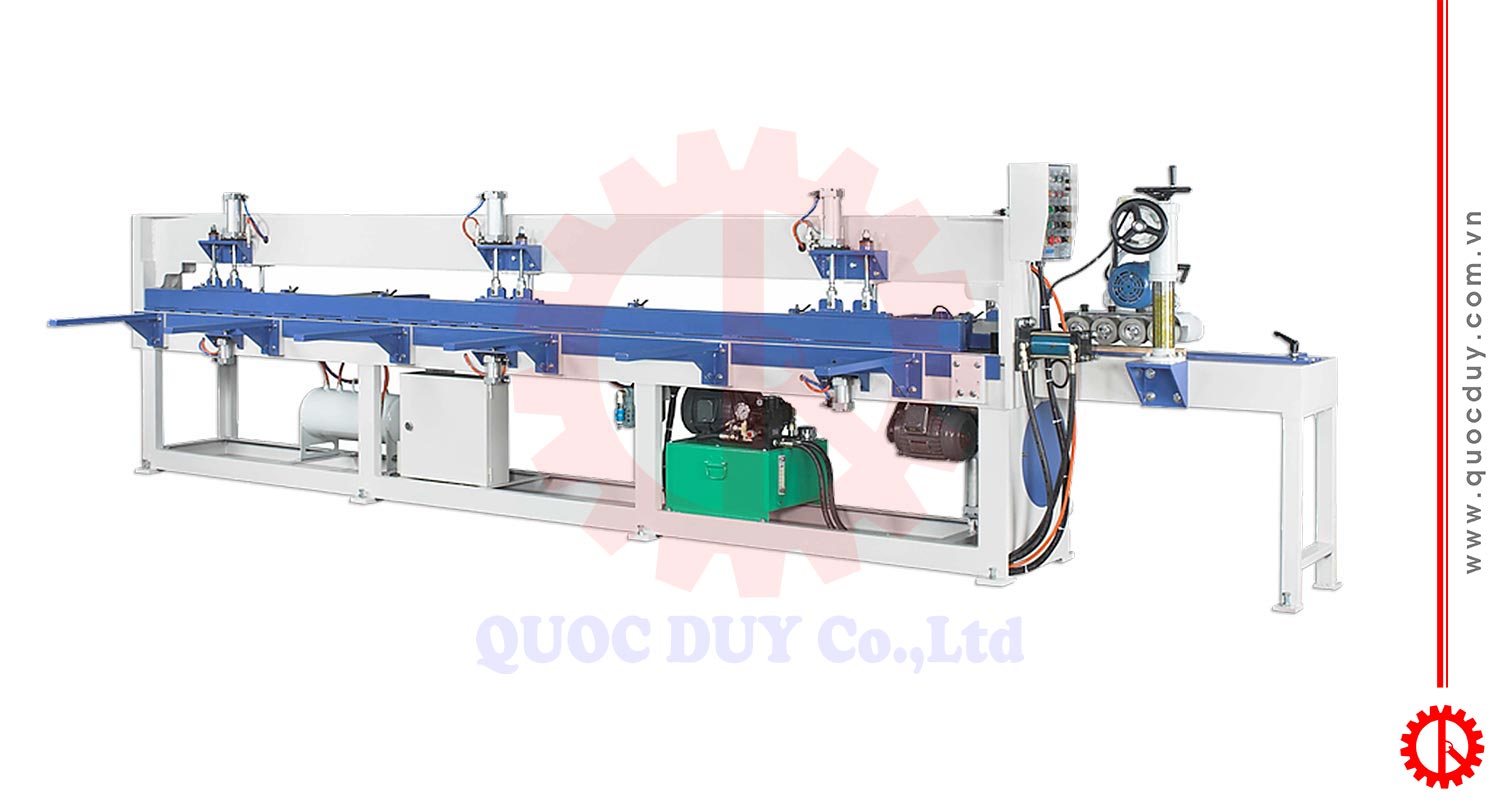
5. LONGITUDINAL JOINING
After milling, wood pieces are transferred to the jointing system.
Single-component adhesive is commonly used for faster curing time.
This machine joins short wood pieces into long, continuous boards.
▶ Stage 3: Finishing
The final stage includes four-side planing and sanding to complete the product.
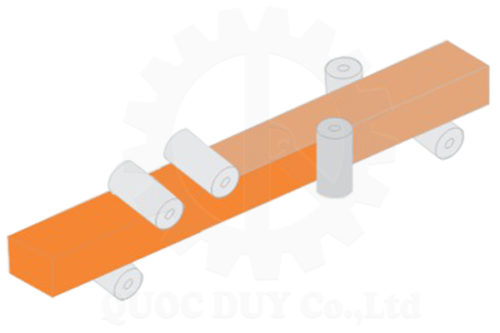
6. FOUR-SIDE PLANER
After joining, the wood is processed to smooth all four surfaces, ensuring a high-quality finished product.
Finger joint production line consulting provider
Quoc Duy Woodworking Machinery – founder of the SEMAC brand.
Proud to be among the top 5 leading woodworking machinery suppliers in Vietnam and international markets.
With over 23 years of experience in woodworking machinery, finishing lines, and production systems.
We deliver advanced and efficient solutions for furniture manufacturing and large-scale production projects.
A pioneer in consulting, designing, and installing industrial finishing systems.
Every production line project is carefully designed and optimized to meet customer needs.
We are committed to providing high-quality machinery tailored to your production requirements.
Phone: (+84-28) 7309 5276
Hotline (24/7): +84 903 600 113
Representative Office: 41/19 Nguyen Oanh, Go Vap ward, Ho Chi Minh City, Vietnam.
Factory & Showroom: 401 To Ngoc Van, Thoi An Ward, Ho Chi Minh City, Vietnam.